

Last updated October 31, 2026
 Kitchen remodeling
 Bathroom remodeling
 Home additions & ADU
 Roofing
 Windows & doors
 Driveway & pavers
 Fence
Free written scope consultation - allowances, timeline, and change-order rules on paper before a single trade is scheduled
How to Hire a Construction Contractor in Gilroy: A Step-by-Step Guide
Most homeowners in Gilroy spend more time researching a new refrigerator than vetting the person who will tear out their kitchen walls. That’s a problem, because the difference between a contractor who has pulled fifty permits in Santa Clara County and one who has pulled none is the difference between a renovation that adds equity and a lien that subtracts it. In a city Gilroy’s size, a contractor’s claimed five-year local track record takes about twenty minutes to verify: ask for two project addresses and drive by. This guide walks you through the steps that actually matter when hiring a construction contractor here, including the ones most checklists leave out. For more guides & resources, see our blog.
Quick Answer
To hire a construction contractor in Gilroy, start by verifying their California contractor’s license through the CSLB, then check their actual permit history with Santa Clara County’s public portal to confirm they have done permitted work locally. Ask specifically about their subcontractor roster, get a written scope with payment tied to inspection milestones, and drive by two completed projects in Gilroy before signing anything.
Styles & brands we work with
Table of Contents
- Step 1: Verify the License, Then Verify the History
- Step 2: Ask Who Actually Shows Up: The Subcontractor Roster
- Step 3: Get a Written Scope That Would Survive a Dispute
- Step 4: Tie Payments to Inspections, Not Calendar Dates
- Step 5: Know the Difference Between a General Contractor and a Handyman
- Step 6: Do the Drive-By Reference Check
- Step 7: Spot the Low-Bid Red Flags Before They Cost You
- Step 8: Read the Contract Like a Banker
Step 1: Verify the License, Then Verify the History
A California contractor’s license is table stakes. Checking it through the Contractors State License Board takes two minutes and confirms the person at your door is legally allowed to do construction work in Gilroy. But a license tells you nothing about whether that contractor has ever completed a project in Santa Clara County. Plenty of licensed contractors from other regions take jobs here without understanding local building codes, soil conditions, or the permit process at the Gilroy Building Division.
The step most homeowners skip: checking permit history. Santa Clara County maintains a public permit portal where you can search by contractor name or license number. You want to see a pattern of permits pulled for the type of work you are planning. A kitchen remodel permit, a roof replacement permit, an ADU permit. If a contractor claims five years of experience in Gilroy but has no permit history in the county, you are not looking at an experienced local contractor. You are looking at someone who has been working unpermitted, or someone who is new here and hoping you will not ask.
- Go to the CSLB website and verify the license is active, with no pending suspensions or complaints.
- Ask the contractor for their license number, not just their business name. Business names can be similar. The number is unique.
- Search the Santa Clara County permit portal for the contractor’s name or license number.
- Look for at least two permits matching your project type pulled within the last three years.
- If the history is thin, ask directly: “Where have you done permitted work in Gilroy?”
This is not about being difficult. It is about confirming that the contractor has navigated the Gilroy building department before. The inspectors here are not interchangeable with inspectors elsewhere. A contractor who has passed Gilroy inspections multiple times knows what the local inspectors look for, how they sequence inspections, and what documentation they expect. That institutional knowledge prevents week-long delays on your project.
Step 2: Ask Who Actually Shows Up: The Subcontractor Roster
In a major metro, a general contractor has a deep bench of subcontractors to draw from. Electricians, plumbers, framers, finish carpenters: the pool is large enough that a GC can find someone qualified within a day or two. Gilroy is a smaller market. The pool of licensed, reliable, available subcontractors is shallower. That reality changes what you need to ask before hiring, as covered in our Complete General Contractor Guide for Gilroy Homeowners.
When you interview a contractor, ask this question directly: “Who is on your subcontractor roster for this project, and how long have you worked with each of them?” A contractor who has been operating in Gilroy for years will have established relationships with local electricians, plumbers, and HVAC techs. They will answer without hesitation: “We’ve used the same electrician for six years. He is based in Morgan Hill. Here is his name.”
A contractor who is new to the market, or who perpetually low-bids, will hedge. They will say things like “we have people we work with” without naming anyone, or “we will assemble the team once the project starts.” That is a red flag. It means they will be cold-calling subs after you have already signed, and in Gilroy, the good subs are booked out. You end up with whoever was available on short notice, not whoever was best for the job.
Ask for the subcontractor roster in writing before you sign. It does not need to be a formal agreement with each sub, but it should list the trades involved and the primary sub for each. At Silver Line Contractors, we keep a stable of subs we have worked with for years, which is how we can offer one contract for everything from home remodeling in Gilroy to exterior work without sourcing new trades mid-project.
Step 3: Get a Written Scope That Would Survive a Dispute
The most common dispute in residential construction is not about price. It is about what was included. The homeowner assumed the quote included painting the new wall. The contractor assumed painting was a separate line item. Nobody wrote it down, and now there is a $3,000 disagreement.
A written scope of work is the remedy. It should be specific enough that a stranger could read it and understand exactly what will be done. Not “install kitchen cabinets” but “supply and install 14 linear feet of KraftMaid maple shaker cabinets in natural finish, including crown molding, soft-close hardware, and all necessary filler strips.” That level of detail protects both parties. It tells you what you are paying for, and it tells the contractor what they are obligated to deliver.
Here is what a useful scope of work includes:
- Materials specified by brand and grade: Cambria or Caesarstone countertops, GAF or CertainTeed roofing, Moen or Delta fixtures. “Mid-grade” is not a specification.
- Quantities: square footage of flooring, linear feet of baseboard, number of outlets, number of recessed light fixtures.
- Exclusions: what is explicitly not included, such as appliance installation, furniture moving, or wall repair after electrical work.
- Demolition and debris removal: who is responsible for hauling, and whether dumpster rental is included.
- Change order procedure: how changes will be priced and approved in writing.
Vague scopes are the signature of the low-bid contractor. They keep the scope fuzzy so they can charge change orders later. A contractor who writes a detailed scope before you sign is signaling that they have thought through your project and they intend to deliver what they promise.
Step 4: Tie Payments to Inspections, Not Calendar Dates
California law limits the down payment a contractor can collect to the lesser of $1,000 or 10% of the project cost. That is the floor, not the ceiling of protection. The payment schedule beyond that is negotiable, and it is where homeowners can protect themselves or expose themselves.
The mistake: agreeing to payments tied to calendar dates. “25% at week two, 25% at week four.” This creates an incentive for delay. The contractor gets paid whether work has been completed or not. If the project stalls, you have already paid for work that does not exist, and your leverage is gone.
The better structure: payments tied to milestones that are verifiable, ideally milestones that correspond to inspections. “20% after rough framing passes city inspection. 20% after rough electrical and plumbing pass. 20% after drywall is hung and taped.” When a payment is contingent on an inspection passing, the contractor’s incentive aligns with yours: they are motivated to get the work done right and get it approved.
Here is a sample payment structure for a full-scope home renovation in Gilroy:
- 10% at contract signing (California maximum down payment)
- 20% after demolition is complete and debris removed
- 20% after rough framing passes inspection
- 20% after rough electrical, plumbing, and HVAC pass inspection
- 15% after drywall installation is complete
- 10% after final fixtures and finishes are installed
- 5% after final inspection passes and punch list is resolved
That final 5% is important. It is your leverage to ensure the contractor returns to fix the crooked cabinet door and repaint the scratched wall before the project is officially closed. A contractor who resists a reasonable final-holdback is telling you something about how they handle punch lists.
Step 5: Know the Difference Between a General Contractor and a Handyman
Under California law, there is a clear legal distinction between a licensed general contractor and a handyman. The handyman path is limited: projects under $500 in combined labor and materials can be done without a contractor’s license. Anything above that threshold requires a license issued by the CSLB. That is the letter of the law.
The practical implication matters more than the legal threshold. A handyman is not required to carry the same insurance, post the same bond, or meet the same standards as a licensed general contractor. If a handyman drops a hammer through your window, or worse, if a handyman’s electrical work causes a fire, your insurance company may deny the claim because the work was done by an unlicensed contractor. You, the homeowner, become liable.
A licensed general contractor carries workers’ compensation insurance, general liability insurance, and a contractor’s bond. Those policies exist to protect you when something goes wrong. They are not optional extras. They are the difference between a covered loss and an out-of-pocket disaster.
This distinction matters especially in Gilroy, where the cost of living makes the $500 handyman threshold attractive. For seasonal maintenance tips, see our Seasonal Construction Care for Gilroy: Year-Round Homeowner’s Guide. A homeowner might hire a handyman to do a bathroom refresh, not realizing that the project involves plumbing and electrical work that pushes it well past the legal limit. The work gets done, the homeowner saves money, and then something fails. The insurance company investigates, discovers the work was unlicensed, and denies the claim. The savings evaporate.
For any project that involves structural changes, plumbing, electrical, or roofing, hire a licensed general contractor. That is not elitism. It is risk management. Silver Line Contractors operates as a licensed general contractor in Gilroy, which means our projects are covered by the insurance and bonding that the law requires and your renovation deserves.
Step 6: Do the Drive-By Reference Check
References are only as good as your willingness to verify them. A contractor can hand you a list of phone numbers connected to friends and relatives. The more reliable method: ask for two project addresses in Gilroy, then drive by.
You do not need to knock on the door, though many homeowners are happy to talk about their renovation. You can learn a great deal from the curb. Does the siding look straight? Does the roof line run true? Are the pavers in the driveway even, or are they settling and shifting? Does the hardscape look like it was installed last month or last decade? These observations tell you more about a contractor’s work quality than any online review.
When you do speak with a reference, ask specific questions:
- “Did the crew show up when they said they would?”
- “Did the final cost match the quoted cost? What did change orders look like?”
- “How did the contractor handle problems that came up during the project?”
- “Did they pull permits, and did the inspections pass on the first attempt?”
- “Would you hire them again for a different project?”
That last question is the one that matters. A homeowner who would not hire the contractor again is not a satisfied reference, no matter how nicely the kitchen turned out.
Step 7: Spot the Low-Bid Red Flags Before They Cost You
In a smaller market like Gilroy, the low-bid contractor follows predictable patterns. They are not cutting their margin because they are efficient. They are cutting scope, cutting materials, cutting permits, or cutting the people who do the actual work. Here are the specific red flags to watch for:
- No Gilroy project addresses: A contractor who has “done lots of work in the area” but cannot produce two addresses is not a local contractor. They are a contractor who wants to be.
- Vague material specifications: “Quality countertops” instead of “Silestone quartz in color X.” When the material is not specified, the contractor is free to install whatever they can source cheapest.
- Out-of-area material suppliers: A contractor who sources everything from a big-box store 40 miles away is not taking advantage of local supply relationships. That is not a crime, but it often means they have not been operating here long enough to build those relationships.
- Hesitation about permits: A contractor who suggests skipping permits to “save time and money” is asking you to accept liability for work that has not been inspected. In Gilroy, unpermitted work becomes a problem when you sell the house.
- No subcontractor names: Covered in Step 2. A contractor who cannot name their subs has no subs.
- A quote that is 30% or more below the field: The money is coming from somewhere. You will find out where when the project stalls or the change orders start.
We have seen low-bid projects in Gilroy that ended up costing more than the highest bid, once the change orders, rework, and delays were added in. The cheap bid is rarely the cheap project.
Step 8: Read the Contract Like a Banker
You are about to sign a document that commits you to spending tens or hundreds of thousands of dollars. Read it the way a loan officer reads a mortgage application: line by line, looking for what is missing as much as what is present.
Here is a checklist of contract terms that protect you on a full-scope project:
- Start date and estimated completion date: Not a guarantee, but a written expectation that gives you a basis for conversation if the project drags.
- Detailed scope of work with material specifications: Attached to the contract as an exhibit, not summarized in a paragraph.
- Payment schedule tied to inspection milestones: As described in Step 4.
- Change order procedure: Written agreement required before any change work begins, with pricing approved before the work is done.
- Permit responsibility: The contractor pulls permits, schedules inspections, and is responsible for passing them. This should be explicit.
- Warranty language: What is covered, for how long, and what is excluded. A one-year workmanship warranty is standard. Manufacturer warranties on materials like roofing and countertops are separate and should be documented.
- Dispute resolution: Mediation before litigation, or whatever process you and the contractor agree on. Having this in writing prevents arguments later.
- Cleanup and site protection: Who is responsible for protecting floors, walls, and landscaping during construction, and who is responsible for final debris removal.
If the contractor hands you a one-page contract and says it is “standard,” ask for the long version. A full-scope renovation deserves a contract that reflects its complexity. At Silver Line Contractors, our contracts run several pages because our projects span multiple trades. Every line exists to protect you and to make sure we are accountable for what we promised.
One more note on the contract: it should name the general contractor, not a shell company. The CSLB license number on the contract should match the license number the contractor gave you in Step 1. If the numbers do not match, stop and ask why.
Common Mistakes to Avoid
- Hiring the first contractor you meet without checking permit history. A license is not enough. Confirm they have actually done permitted work in Gilroy through the Santa Clara County portal.
- Accepting a verbal scope of work. If it is not in writing, it does not exist. Get every material, quantity, and exclusion documented before you sign.
- Paying too much upfront. California caps the down payment at 10% or $1,000, whichever is less. A contractor who asks for more is telling you something.
- Skipping the drive-by reference check. Two project addresses in Gilroy, forty minutes of your time, and you will know more about the contractor than any review site will tell you.
- Hiring a handyman for work that requires a general contractor. If the project involves plumbing, electrical, structural, or roofing, do not risk your insurance coverage on an unlicensed operator.
- Ignoring the subcontractor question. In Gilroy, the quality of the subs determines the quality of the finished work. Ask who shows up.
- Signing a contract without a payment schedule tied to inspections. Calendar-based payments reward delays. Inspection-based payments reward completion.
See the difference
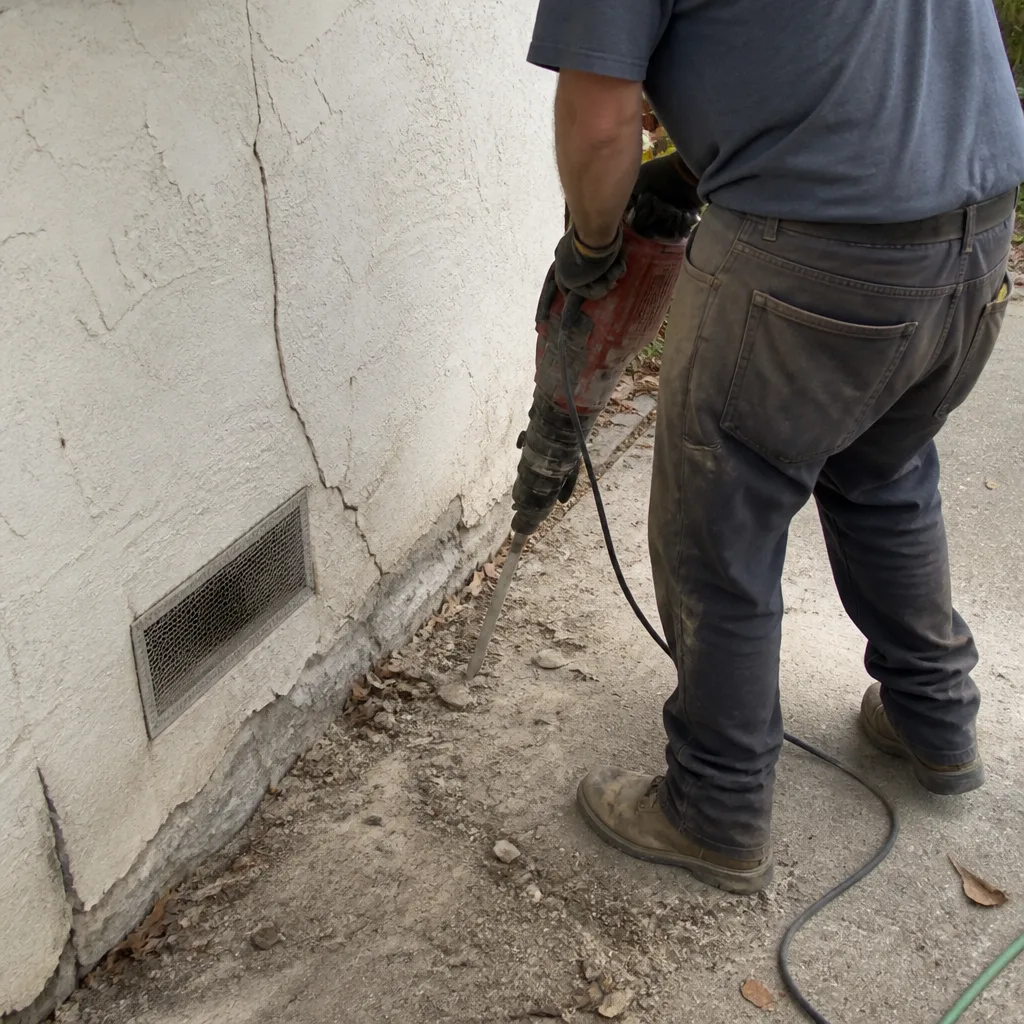 Before
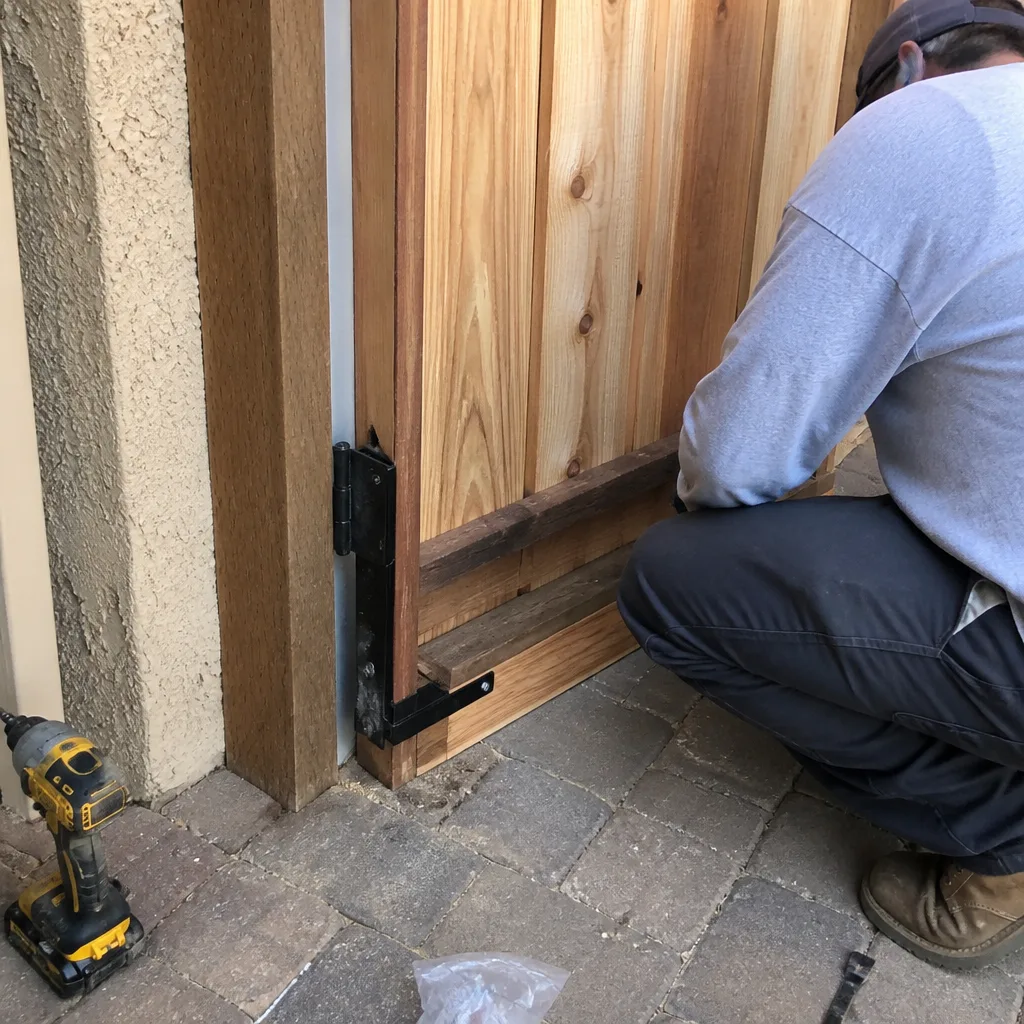 After
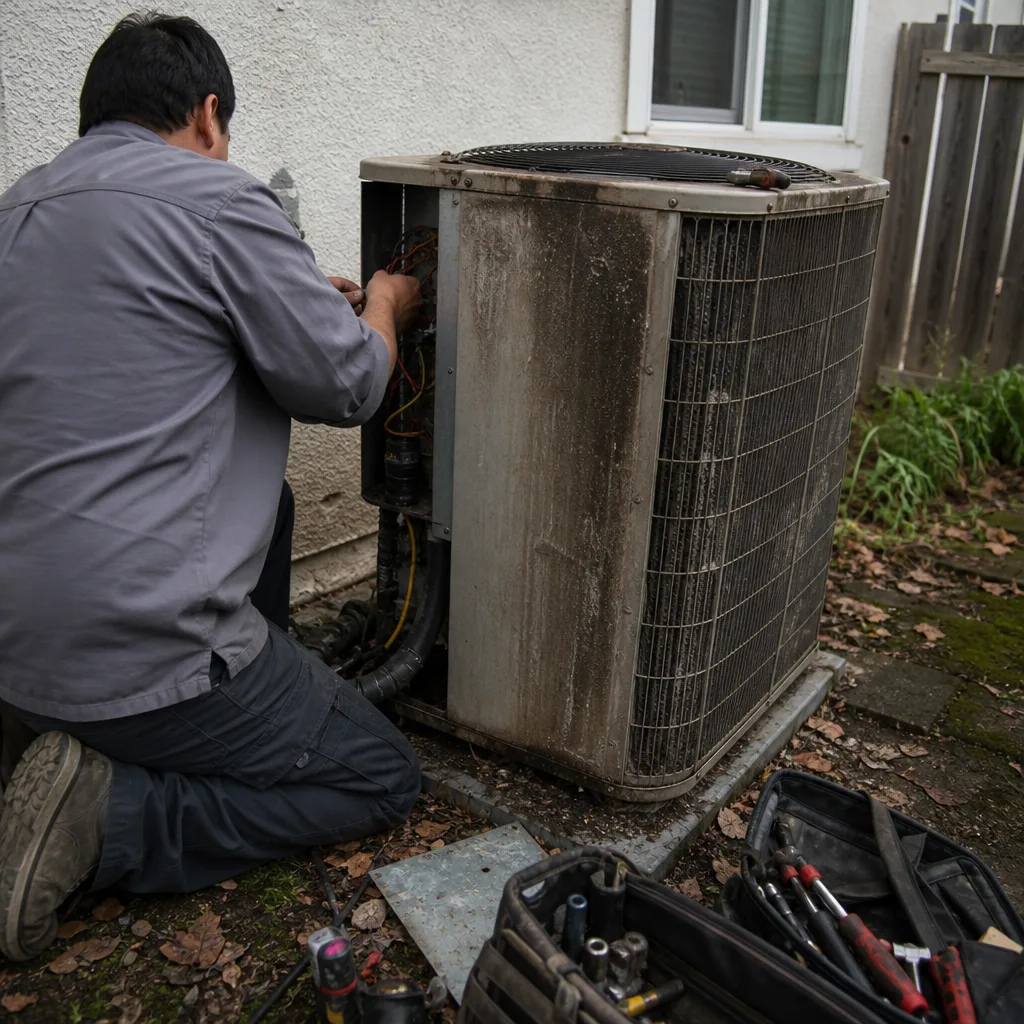 Before
 After
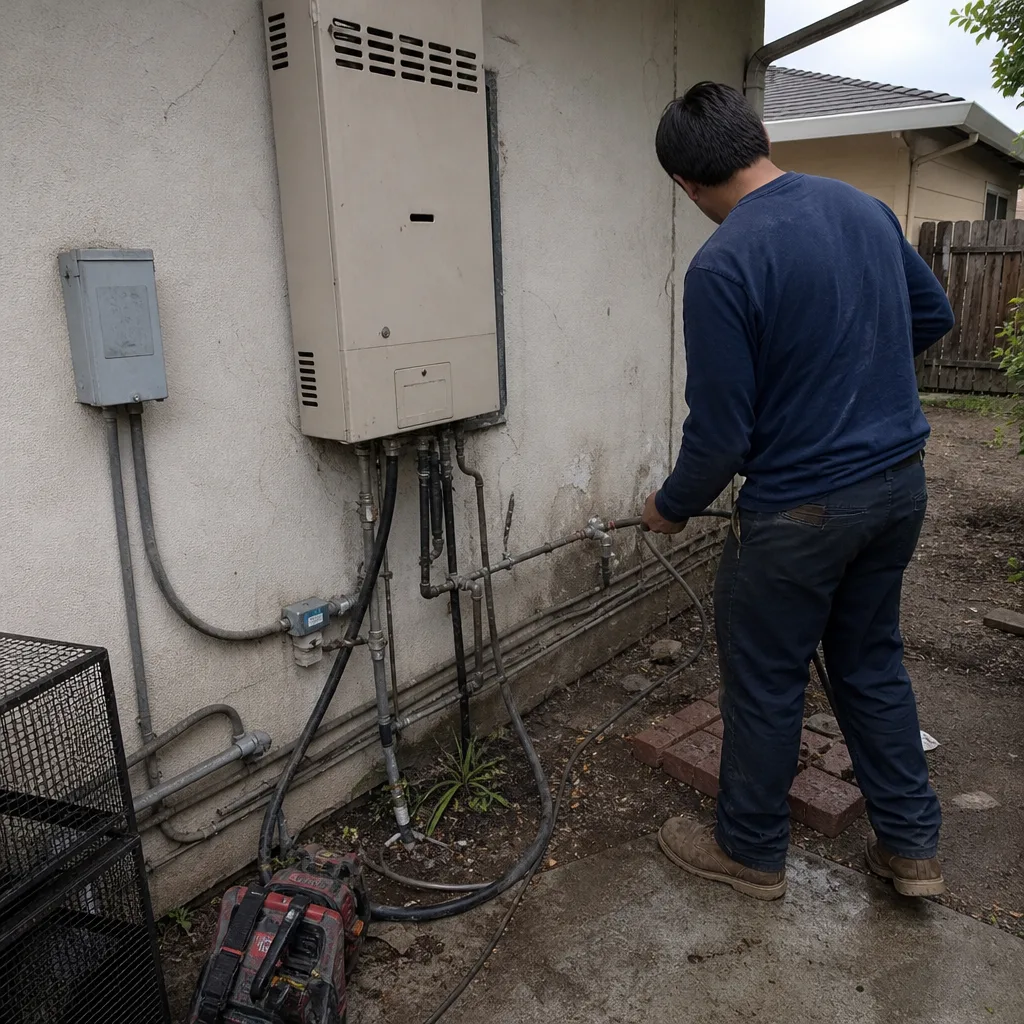 Before
 After
When to Call a Professional
If your project involves moving walls, changing rooflines, adding square footage, or building an ADU in Gilroy, you need a licensed general contractor, not a handyman and not a specialist working alone. These projects require permits, engineering, coordinated trades, and inspection scheduling that a general contractor is licensed to manage. The same applies to full-scope renovations that touch multiple systems: a kitchen remodel that reroutes plumbing and electrical, a bathroom that changes the footprint, or a roofing replacement that ties into new siding and windows.
Silver Line Contractors offers free estimates in Gilroy. If you are planning a project and want to know what it will cost and what it will involve, call (833) 400-1314. We will walk the site, discuss scope, and give you a written estimate with real material specifications. No pressure, no obligation, no vague promises.
Frequently Asked Questions
Check the Contractors State License Board website at cslb.ca.gov and search by the contractor’s license number, which you should ask for directly. The license should be active, with no suspensions or serious complaints on file. Then go further and check the Santa Clara County permit portal for the contractor’s name to see if they have a history of permitted work in Gilroy specifically.
A construction contract in Gilroy should include a detailed scope of work with specific material brands and quantities, a payment schedule tied to inspection milestones, a change order procedure, permit responsibility, warranty language, and an estimated start and completion date. If the contract is one page, it is probably missing something important.
Kitchen remodels in Gilroy typically range from $35,000 to $85,000 depending on cabinet grade, countertop material, and appliance selection. Full bathroom remodels usually run $18,000 to $40,000. Whole-home renovations vary widely based on square footage and condition, but expect a range of $150 to $350 per square foot for a comprehensive scope. For an exact quote on your project, call (833) 400-1314 to schedule a free estimate.
A contractor’s license confirms they are legally allowed to work in California, but permit history confirms they have actually completed work in Gilroy and passed local inspections. A contractor with a clean license but no permit history in Santa Clara County has not demonstrated they can navigate the local building department, which is a meaningful risk on a full-scope project.
California law limits the down payment on a home improvement contract to the lesser of $1,000 or 10% of the total project cost. Any contractor asking for more than that before work begins is violating state law, and you should not sign with them.
Yes. Silver Line Contractors has ADU construction capability through partnerships with prefab manufacturers including Abodu, which streamlines the design, permitting, and construction process for accessory dwelling units. This is a specialty service that most general contractors in Gilroy do not offer, and it means your ADU can be handled under one contract from site preparation through final inspection. Call (833) 400-1314 to discuss your ADU project.
The Bottom Line
Hiring a construction contractor in Gilroy is not about finding the lowest bid or the biggest ad in the local paper. It is about verifying the things that matter: permit history in Santa Clara County, a stable subcontractor roster, a written scope with specific materials, and a payment schedule that ties your money to completed, inspected work. The contractors who pass those checks are the ones who finish projects. The ones who fail them are the ones who disappear mid-project, leaving you with an open wall, a depleted bank account, and no recourse. Do the homework. Drive by the references. Read the contract. Then sign.
If you are planning a renovation, addition, or ADU in Gilroy, Silver Line Contractors can help. One contractor, every phase, from our team at Silver Line Contractors to your finished project. Call (833) 400-1314 for a free estimate.
Written by the team at Silver Line Contractors, serving Gilroy since 2017.