

Last updated October 31, 2026
 Home additions & ADU
 Kitchen remodeling
 Bathroom remodeling
 Roofing
 Windows & doors
 Driveway & pavers
 Fence
Free written scope consultation - allowances, timeline, and change-order rules on paper before a single trade is scheduled
General Contractor Maintenance Checklist for Gilroy Homeowners
Gilroy averages more than 70 days above 90°F each year, and that relentless thermal cycling does more damage to a house than most people realize. It’s not the occasional rainstorm that ages a home here; it’s the daily expansion and contraction of stucco, caulk, roofing membranes, deck fasteners, and concrete joints as the temperature swings from cool morning to scorching afternoon and back again. Most maintenance checklists are written for a generic American house, but Gilroy homes face a specific set of stressors: intense UV exposure from June through October, a compressed rainy season from November through March, clay-heavy soils that swell and shrink with moisture, and agricultural dust that clogs HVAC systems faster than suburban averages. This guide is calibrated to what actually degrades in this microclimate, and the order in which you should address it. If you own a home in Gilroy, this is the checklist that will save you money and prevent the five-figure repairs we see most often.
Quick Answer
A Gilroy-specific home maintenance routine should prioritize exterior envelope inspection before the November rains, stucco and caulk repair in early autumn, gutter cleaning in October and again in January, HVAC filter replacement every 30-45 days during summer due to agricultural dust, hardscape crack inspection every spring as soils dry out, and a full roof inspection every two years. The single most important principle: address exterior wear before the rainy season starts, because water intrusion through failed caulk or cracked stucco is the number one driver of costly repairs in Gilroy homes. We’ve included specific cadence recommendations for each system below, along with guidance on which tasks genuinely require a California-licensed contractor.
Styles & brands we work with
Table of Contents
- The Gilroy Seasonal Maintenance Calendar
- Roof and Gutter Inspection: Timing for a Compressed Rainy Season
- Stucco, Caulk, and Exterior Paint: UV Is the Primary Threat
- Hardscape and Concrete: Clay Soil Movement and Crack Monitoring
- HVAC Filters and Ductwork: Agricultural Dust and Ozone Days
- Windows and Doors: Thermal Cycling and Weather Seals
- What Requires a Licensed Contractor in California vs. Genuine DIY
- Common Mistakes to Avoid
- When to Call a Professional
- Frequently Asked Questions
The Gilroy Seasonal Maintenance Calendar
Gilroy’s climate doesn’t follow the four-season rhythm that most national checklists assume. We essentially have two functional seasons: a long, hot dry stretch from April through October, and a shorter, wetter window from November through March. That means the traditional “spring and fall” maintenance advice needs to be recalibrated for this microclimate.
Here’s the cadence we recommend for homeowners in Gilroy, based on what we’ve observed across hundreds of homes in the area:
- September – October (Pre-Rain Prep): This is your most important maintenance window of the year. Inspect caulk around windows, doors, and exterior penetrations. Touch up any stucco hairline cracks that could admit water. Clean gutters thoroughly before leaf debris accumulates. Check roof flashings and step flashing around chimneys, vents, and skylights. Apply fresh caulk to any joint that has dried or pulled away during the summer heat.
- November – December (Early Rain Monitoring): After the first significant rainfall, walk your property and look for pooling water against the foundation, overflow from gutters, or damp spots on ceilings and walls. Address drainage issues early in the rainy season rather than waiting until January.
- January – February (Mid-Rain Inspection): Clean gutters a second time if you have mature trees nearby. Check for wind-driven rain damage around windows and doors. Inspect the attic after heavy storms for signs of roof leaks.
- March – April (Post-Rain Assessment): As the soil begins to dry, inspect hardscape for new cracks from winter soil movement. Check concrete flatwork for heaving or settlement. Look for stucco cracks that appeared during the wet season as the ground shifted and the house settled.
- May – June (Summer Prep): Replace HVAC filters and consider a ductwork inspection. Check weatherstripping on doors and windows before the hottest months arrive. Clean debris from the base of exterior walls where dry vegetation can hold moisture against stucco.
- July – August (Peak Heat Monitoring): Inspect for caulk failure on south- and west-facing walls, which take the brunt of Gilroy’s afternoon sun. Check deck fasteners on uncovered decks, which loosen noticeably during extended heat. Monitor HVAC performance, as summer ozone days and agricultural dust push systems hardest during this window.
This calendar reflects the reality of Gilroy’s climate: the dry season is when most material degradation happens, and the wet season is when you discover it. Staying ahead of that cycle is the core of effective home maintenance here.
Roof and Gutter Inspection: Timing for a Compressed Rainy Season
In Gilroy, the rainy season is short but intense. Most of the year’s precipitation falls between November and March, which creates a specific challenge: roof problems can sit dormant through eight dry months and then suddenly become urgent when the first atmospheric river arrives. The timing of your roof and gutter maintenance should be built around this compressed wet window, not around generic spring and fall advice.
Why timing matters more here than in most climates: A small crack in flashing that would only cause a minor leak in a region with regular rainfall becomes a significant water intrusion event in Gilroy, because it sits unnoticed through the long dry season. Water can be tracking into the underlayment during every winter storm, but you might not see ceiling stains until months later. Our experience as a general contractor in Gilroy has shown that roof damage discovered in March is often the result of October’s first rains.
What to check, when
- October gutter cleaning is non-negotiable: Even if your home has minimal tree cover, Gilroy’s agricultural dust and the fine debris from surrounding hillsides accumulate in gutters through the dry season. Clogged gutters mean water cascades over the edge and saturates the soil against your foundation, which is a particular concern with clay-heavy soils that expand dramatically when wet.
- January re-cleaning for homes near mature oaks or sycamores: A second gutter cleaning mid-winter is cheap insurance if leaves and branches come down during the first storms. Overflowing gutters in January create exactly the conditions that cause stucco damage at the eaves and water intrusion at the roofline.
- Roof inspection every two years, ideally in September or October: An inspection before the rainy season identifies cracked tiles, lifted shingles, failing pipe boots, and compromised flashing while there’s still time to make repairs in dry weather. Waiting until the first leak appears is the most expensive version of this maintenance item.
- Valley and flashing checks are the priority: In our experience, roof failures in Gilroy homes are rarely the fault of the shingle or tile itself. It’s the flashings, valleys, and penetrations that fail under thermal cycling. Those transition points expand and contract at different rates than the roofing material around them, and silicone or mastic seals dry out in the heat.
When replacing a roof in this climate, the material choice matters more than in most markets. We work with manufacturers like GAF, CertainTeed, and Owens Corning because their contractor-backed warranty programs are well-suited to the UV intensity we see in Gilroy. Certain premium shingle formulations are specifically engineered for high-heat, high-UV regions. If you’re planning a roof replacement as part of a broader home renovation in Gilroy, material selection is a conversation worth having before the first quote, because not all shingle lines perform equally under 100°F-plus conditions.
Stucco, Caulk, and Exterior Paint: UV Is the Primary Threat
Stucco is the most common exterior cladding on Gilroy homes, and it behaves differently in this climate than in coastal or foggy regions of California. The primary degradation mechanism is not moisture, it’s UV radiation and thermal expansion. When a home’s exterior surfaces heat up to 140°F plus on a summer afternoon and then cool to the 50s overnight, the stucco and the trim materials around it expand and contract at slightly different rates. That differential movement cracks caulk joints first, then hairline stucco cracks appear, and eventually water finds its way in during the rainy season.
Inspection cadence that reflects Gilroy’s reality
- Inspect south- and west-facing walls every September: These elevations take the most UV exposure and the most thermal stress in Gilroy. Walk the exterior with a flashlight and look for hairline cracks wider than 1/32 of an inch, crumbling caulk at window perimeters, and any bubbling or flaking paint on trim boards.
- Caulk replacement is an every-12-to-18-month item here: In milder climates, exterior caulk can last three to five years. Under Gilroy’s UV load and thermal cycling, we see typical acrylic latex caulk fail noticeably sooner. Use an elastomeric or polyurethane caulk for exterior joints; standard painter’s caulk is not adequate for the movement we see on south-facing walls.
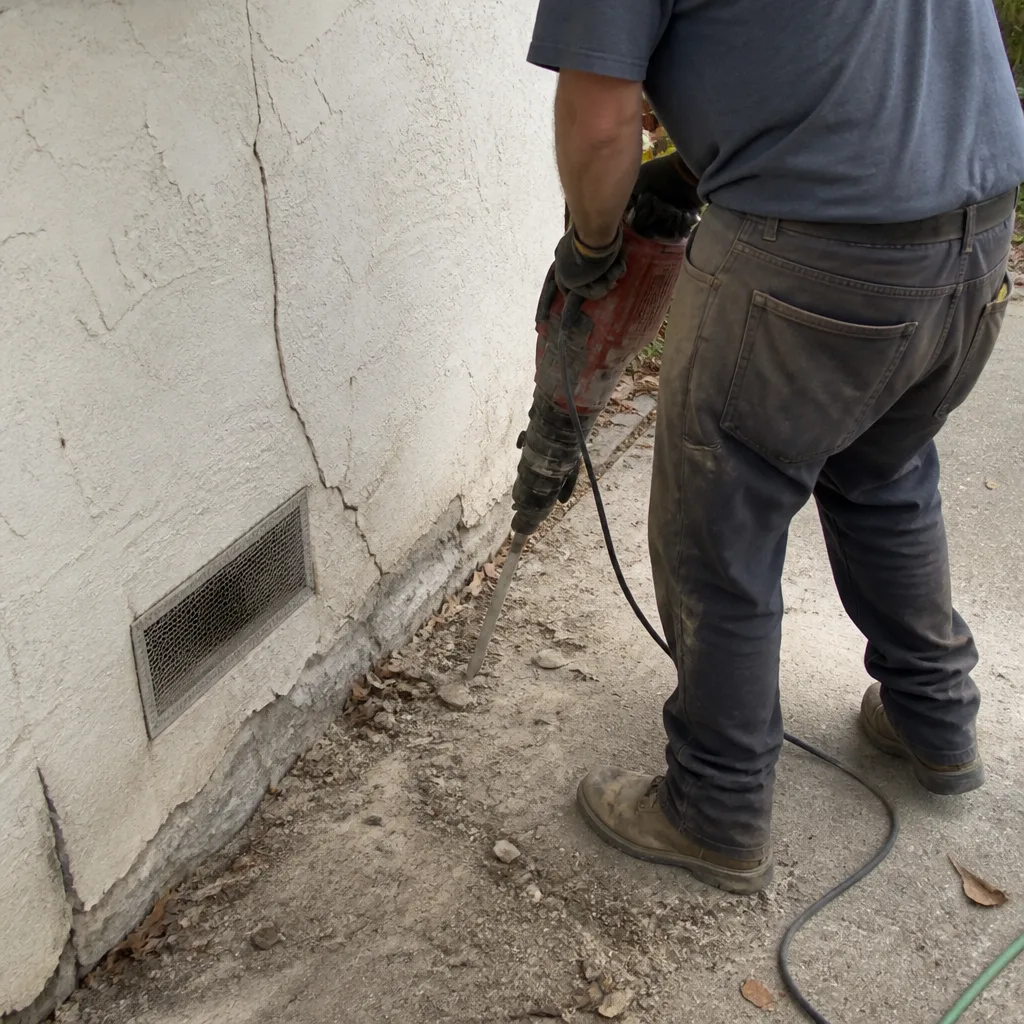
- Stucco hairline cracks under 1/16 inch are generally cosmetic: They can be filled with an elastomeric stucco patch compound. Cracks wider than 1/16 inch, diagonal cracks extending from window corners, or cracks that continue to widen between seasons warrant a professional assessment, because they can indicate foundation movement or structural settlement.
- Exterior paint on trim and fascia has a shorter service life in Gilroy than in coastal California: Expect to repaint exterior trim every 5-7 years on most Gilroy homes, with south-facing elevations sometimes showing failure at 4-5 years. Faded or chalky paint is cosmetic; peeling or cracked paint is a moisture barrier failure that needs attention before winter.
When exterior work does become necessary, the scope often extends beyond simple repainting. Many Gilroy homeowners find that a full home remodeling project is the right moment to address stucco repairs, window replacement, and re-siding in one coordinated effort. Re-siding a home with James Hardie fiber cement or similar engineered products can dramatically reduce the maintenance cadence, because these materials are designed for high-UV climates and hold paint significantly longer than wood or traditional stucco.
Hardscape and Concrete: Clay Soil Movement and Crack Monitoring
Gilroy sits on a valley floor with substantial clay in many soil profiles, and clay soils present a specific challenge for hardscape maintenance. Clay expands when wet and shrinks when dry, with a degree of movement that can shift pavers, crack concrete flatwork, and gradually undermine retaining walls. The wet-dry cycle we experience every year, with months of hot drought followed by concentrated winter rain, is the classic driver of pavement failure in this area.
What to watch for, and when
- Inspect all concrete flatwork in April: After the winter rains have saturated the subgrade and then early spring drying begins, this is when new cracks appear and existing cracks widen. Pay particular attention to driveways, walkways, and patios where the soil beneath transitions from deep to shallow, which creates differential movement.
- Crack width is your triage guide: Hairline cracks under 1/8 inch are usually cosmetic and can be sealed to prevent water intrusion. Cracks between 1/8 and 1/4 inch deserve crack sealing before the next rainy season. Cracks over 1/4 inch with visible vertical displacement indicate a subgrade failure that likely needs professional evaluation, because patching the surface will not address the underlying soil movement.
- Paver patios should be checked for low spots every spring: As clay soils expand and contract, paver bases can shift, creating subtle depressions that hold water after rain. Those low spots will only get worse. Re-screeding and re-compacting a small section is a manageable repair; ignoring it leads to a larger failure that requires re-setting a significant area.
- Check retaining walls for signs of movement each fall: Before the rainy season adds hydrostatic pressure behind the wall, look for bulging, leaning, or widening mortar joints. A retaining wall that is beginning to move will get measurably worse during the first series of winter storms.
Hardscape work in Gilroy is one area where DIY repair often makes sense for small, cosmetic issues like crack sealing or re-sanding paver joints. But significant flatwork replacement, drainage correction, or retaining wall repair is contractor territory. The subgrade preparation and drainage details make the difference between a repair that lasts eight years and one that recracks in eighteen months. Brands like Belgard, Unilock, and Techo-Bloc are the standard for pavers and retaining systems in this area, and Tamko offers complementary products for certain hardscape and drainage applications that hold up well under Gilroy’s UV load.
HVAC Filters and Ductwork: Agricultural Dust and Ozone Days
Gilroy’s agricultural setting means the air carries more particulate matter than typical suburban environments. Between garlic harvest activities, field work in the surrounding agricultural areas, and the fine dust that blows across the valley floor, HVAC systems in Gilroy homes work harder and clog faster. Summer ozone days add another layer of air quality pressure that many homeowners don’t consider until their system is underperforming.
The maintenance cadence we recommend based on what we see in Gilroy homes:
- Replace filters every 30-45 days during summer months (May through September): This is more frequent than the 90-day schedule often printed on filter packaging, which assumes typical suburban air. Agricultural dust in the Gilroy area clogs pleated filters noticeably faster. A clogged filter forces the blower motor to work harder, reduces airflow across the coil, and accelerates system wear.
- Use MERV 8-13 filters, not the cheapest fiberglass option: The bargain filters do almost nothing for agricultural dust. A MERV 8 pleated filter balances airflow and particulate capture. If anyone in the home has respiratory sensitivities, MERV 11 or 13 is appropriate, but check that your system’s airflow is adequate with denser filters.
- Ductwork inspection every 3-5 years: Ducts in crawlspaces and attics accumulate dust, and in some Gilroy homes, rodent activity adds another reason to inspect. Look for separated duct sections, crushed flex duct, and gaps at register boots. Duct leakage of just 15-20% can increase cooling costs significantly during those 100°F weeks.
- Consider a condensate line check in late spring: Algae and mineral buildup in condensate drain lines is common in areas with hard water. A clogged line causes the system to shut down or the drain pan to overflow, usually discovered on the hottest day of the year. Preventive flushing in May is cheap insurance.
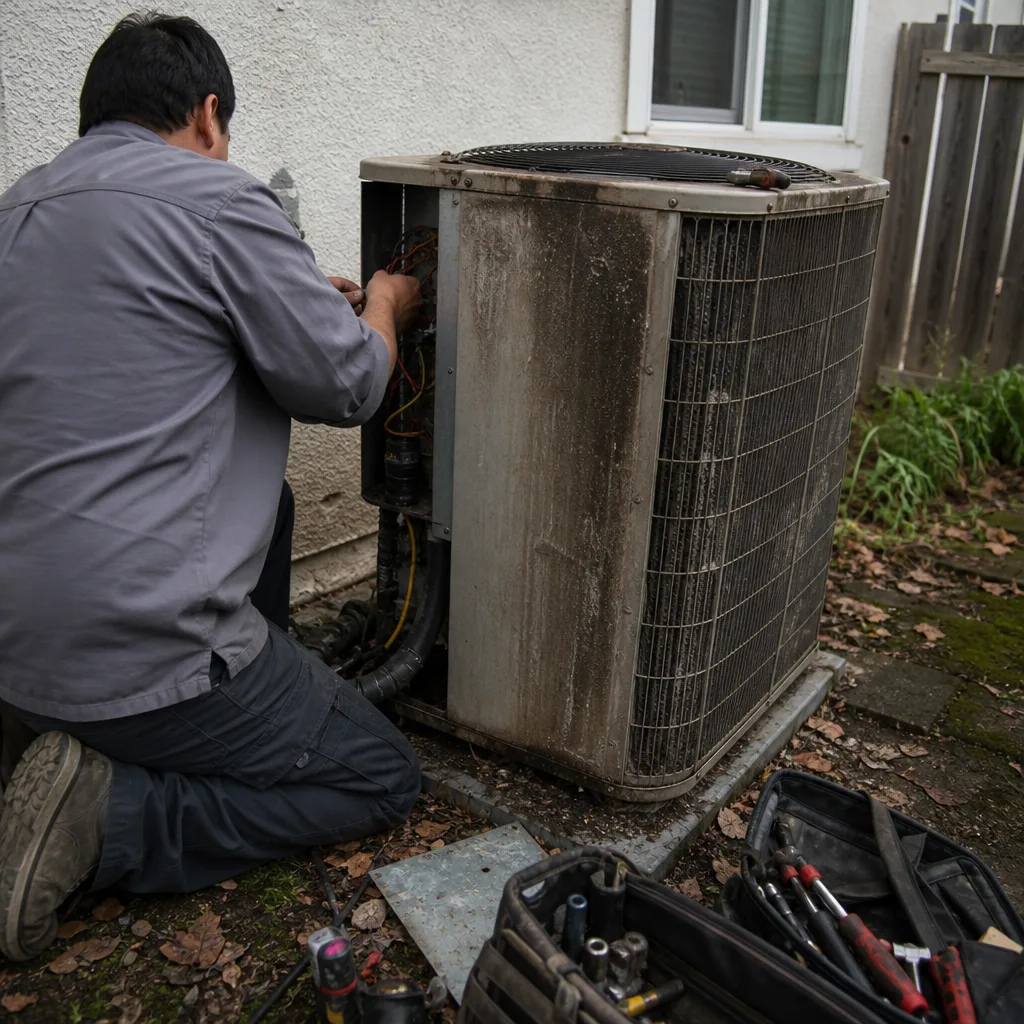
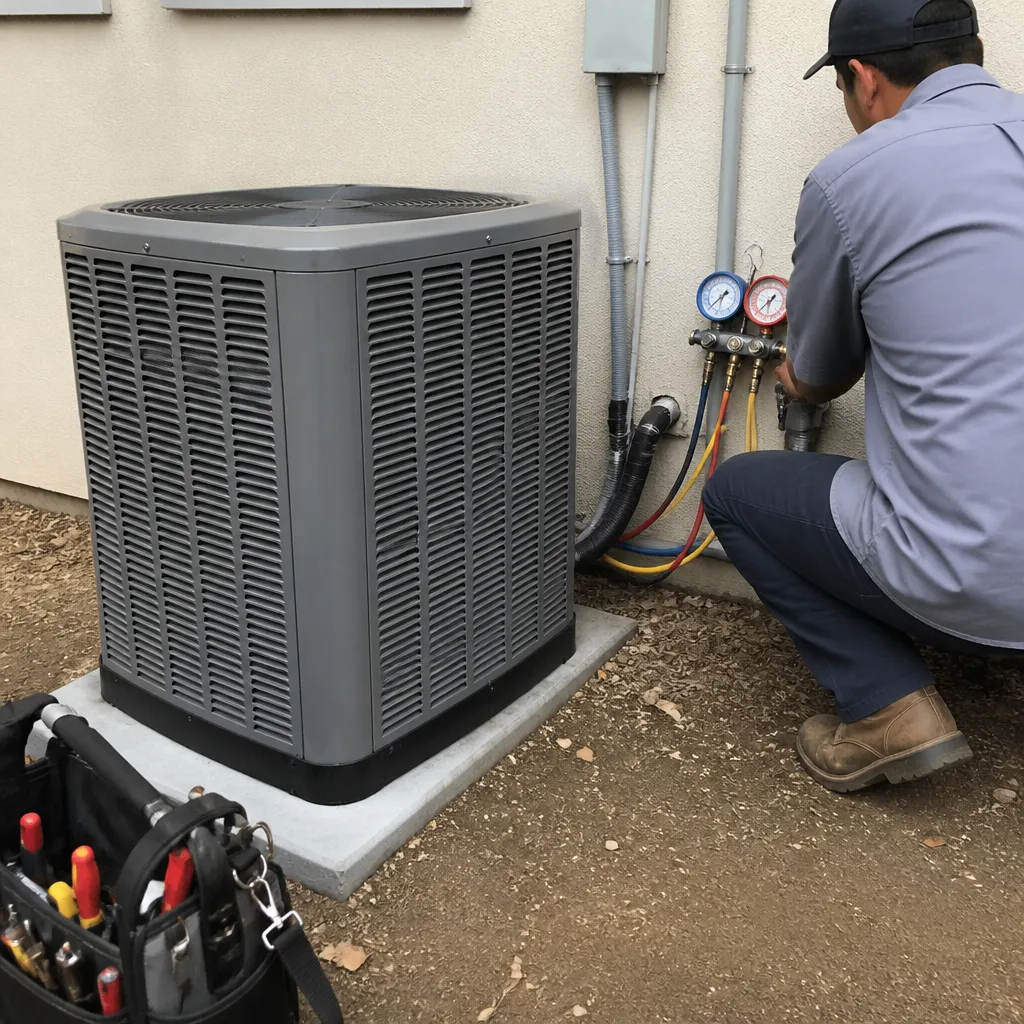
HVAC work is one area where California law is fairly clear: refrigerant handling requires EPA certification, and most substantive HVAC repair work requires a C-20 license. Filter replacement and basic coil cleaning (with the power off) are reasonable DIY tasks. Anything involving refrigerant, electrical components, or ductwork modification should go to a licensed contractor. As a provider of General Contractor services managing whole-home projects, we coordinate HVAC work for our renovation clients, but we always bring in properly licensed HVAC trades for the mechanical work itself.
Windows and Doors: Thermal Cycling and Weather Seals
Windows and doors are usually the first components to show the effects of Gilroy’s thermal cycling, because they are the interface between two very different environments. The exterior side of a window frame on a south-facing wall can reach 140°F on a July afternoon, while the interior side sits at 75°F. That temperature differential creates constant stress on weatherstripping, seals, and the joint between the window frame and the stucco or siding around it.
What to check, and what the failures look like:
- Weatherstripping on exterior doors should be checked every September: The compression seals on door bottoms and jambs lose resilience faster in Gilroy’s heat than in milder climates. A door that no longer seals properly lets conditioned air escape all summer, and lets wind-driven rain into the door threshold during winter storms. Replacement weatherstripping is a genuine DIY item and one of the highest-ROI maintenance tasks you can do.
- Window perimeter caulk deserves an annual inspection: The joint between the window frame and the exterior cladding is where we see the most consistent water intrusion in Gilroy homes. Caulk failure here is usually visible as cracking, separation, or gaps. Elastomeric caulk is mandatory on this joint; painter’s caulk will fail within months on south-facing windows.
- Single-pane windows in older Gilroy homes are a major energy drain: If your home still has original single-pane aluminum windows, heat gain in summer and heat loss in winter is a significant portion of your HVAC load. Replacement with double-pane, low-E windows is a capital investment that pays back in comfort and energy costs. Impact-rated options from manufacturers like PGT and CGI are available for homes where wind-borne debris or security is a concern, and ECO Window Systems offers alternatives that meet California Title 24 requirements.
- Sliding door tracks and rollers need seasonal attention: Dust from Gilroy’s dry season accumulates in door tracks, causing rollers to bind and the door to operate roughly. Forcing a sticky sliding door eventually bends the hardware and can misalign the frame, creating an air gap at the weatherstripping. Clean tracks every few months during summer, and lubricate rollers annually.
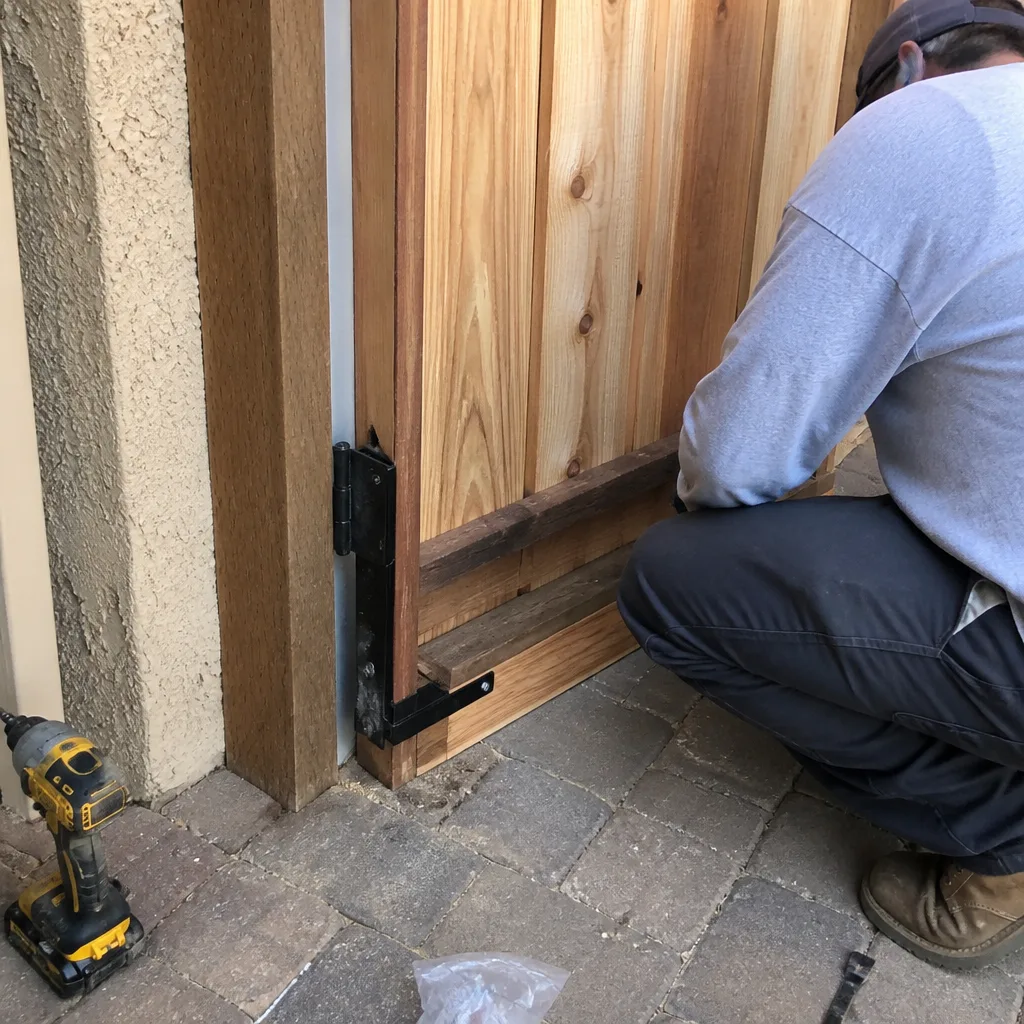
Window and door replacement is one of the areas where working through a full-scope contractor makes sense, as detailed in our How to Hire a Construction Contractor in Gilroy: A Step-by-Step Guide. The waterproofing details where the new window meets the existing stucco or siding determine whether the installation leaks in five years or thirty. This is also the moment when many homeowners discover they want to coordinate window replacement with other exterior work, since the stucco patch around each window is a visible element of the finished project. Silver Line Contractors works with manufacturers including PGT, CGI, ECO Window Systems, and Therma-Tru to give Gilroy homeowners options across multiple impact ratings and budget tiers.
What Requires a Licensed Contractor in California vs. Genuine DIY
California law draws specific lines around what a homeowner can and cannot do without a contractor’s license, and understanding those lines protects you in more ways than one. Doing unlicensed work yourself that falls outside the homeowner exemption is a legal exposure; hiring an unlicensed person to do contractor work is both a legal exposure and a financial risk, because you forfeit many consumer protections available through the Contractors State License Board.
Legal DIY territory for a California homeowner: You may work on your own owner-occupied single-family home without a contractor’s license, provided you do the work yourself and do not have employees or a hired crew. Genuine DIY maintenance items on this checklist include: replacing HVAC filters, cleaning door tracks and rollers, replacing weatherstripping, sealing hairline stucco cracks, cleaning gutters, re-sanding paver joints, caulking window perimeters, touching up paint, and replacing pressure-treated deck boards on low decks.
Work that requires a licensed contractor even for homeowners: Anything involving a building permit and structural changes. In Gilroy, this means:
- Roof replacement: Requires a permit through the City of Gilroy, and the work must be done by a licensed contractor or a homeowner who passes the owner-builder permit process. The owner-builder route is available, but you accept full legal liability for the installation, which affects future property transactions and insurance claims.
- Structural repairs: Any repair to load-bearing walls, foundations, beams, or roof structure requires a permit and a licensed contractor, full stop. California law does not carve out a homeowner exception for structural work.
- Window replacement that changes the opening size: Swapping same-size windows is generally DIY legal. Changing the rough opening requires a permit and structural verification.
- Electrical and plumbing work beyond minor replacements: California allows homeowners to replace fixtures, switches, and outlets in their own home. New circuits, panel work, gas line work, and any plumbing above and beyond fixture replacement requires a licensed tradesperson with the appropriate specialty classification.
- HVAC work involving refrigerant: EPA Section 608 certification is mandatory for anyone handling refrigerant. Installing or servicing a split system’s refrigerant lines is not DIY work.
- Hardscape work requiring engineered design: A patio with a simple paver bed is DIY legal. A retaining wall over 4 feet, or any wall subject to surcharge loads, requires an engineer’s design and a permit.
The practical line we draw for our clients: if a maintenance task can cause water intrusion, structural compromise, or life-safety issues if done wrong, hire a professional. Caulk a window, yes. Replace a flashing to prevent roof leaks, call a contractor. Seal a hairline stucco crack, yes. Repair a stucco crack at a structural corner that might indicate foundation movement, bring in a professional evaluation first.
Common Mistakes to Avoid
- Using the wrong caulk on exterior joints. We see this constantly. Acrylic painter’s caulk goes on easy and looks fine for three months, then hardens and cracks under Gilroy’s UV load. Exterior joints, especially around windows and doors, need elastomeric or polyurethane caulk that can stretch with thermal movement. The extra two dollars per tube is the cheapest insurance you’ll buy all year.
- Cleaning gutters only once a year. One October cleaning might be enough for a home with zero nearby trees and no wind-driven debris, but most Gilroy homes need a second pass in January. The agricultural dust and fine debris that builds up through the dry season is heavier than the leaf load most national checklists assume.
- Ignoring small stucco cracks because they’re cosmetic now. A 1/32-inch crack in September becomes a 1/16-inch crack by February when the wet soil expands and the house shifts slightly. Water gets in, the crack widens, and a $15 tube of patch compound becomes a $1,500 stucco repair. Address hairline cracks before the rainy season, every year, on the sun-exposed elevations.
- Running the HVAC with a clogged filter because the filter says 90 days. In Gilroy, that 90-day filter is often a 45-day filter. A restricted filter raises your cooling bill, shortens blower motor life, and reduces indoor air quality during the worst agricultural dust months. Set a reminder and check the filter on the first of each month from May through September.
- Dealing with drainage problems after the rain starts. The first atmospheric river in November is not the time to discover that your downspouts empty against the foundation or that the soil grade slopes toward the house. Drainage corrections are one of the most preventable sources of foundation damage in Gilroy, and they should be assessed in September when the ground is dry enough to work.
- Assuming the roof is fine because it hasn’t leaked recently. In Gilroy, eight dry months can mask a failing roof. The first evidence of failure often arrives as a ceiling stain in December, at which point the underlayment has already been compromised. Bi-annual roof inspection in the fall is a fraction of the cost of a water-damage repair plus a new roof section.
- Doing structural work without a permit to save time. Unpermitted structural work follows you at sale time, can void your insurance coverage if something fails, and in many cases costs more to correct after the fact than the permit and inspection would have cost in the first place. The City of Gilroy building department is staffed by reasonable people; the permitting process is more cooperative than many homeowners assume.
When to Call a Professional
Most of the preventive maintenance in this guide is DIY-appropriate, but there are specific situations where professional help is the financially smart choice. Call a licensed contractor when you see: a roof leak that appears during or after rain, a stucco crack wider than 1/16 inch that continues to widen between seasons, a retaining wall showing any visible movement or bulging, a concrete flatwork crack with vertical displacement, water stains on interior ceilings or walls during the rainy season, or any foundation crack that runs diagonally from a window or door corner. These are not maintenance issues; they are indicators of systemic problems that will worsen with each wet-dry cycle. Silver Line Contractors offers free estimates in Gilroy. Call (833) 400-1314 to schedule a walkthrough of your property, and we’ll give you an honest assessment of which items are maintenance and which ones need real attention.
Frequently Asked Questions
Every two years, and the inspection should happen in September or October, before the rainy season begins. Gilroy’s compressed wet season means roof problems sit dormant through eight dry months and then reveal themselves as leaks during the first winter storms. A pre-rain inspection catches flashing failures, dried pipe boots, and cracked tiles while repairs can still be made in dry weather. Call (833) 400-1314 if you’d like a roof inspection scheduled as part of a broader exterior assessment.
Yes, roof replacement requires a permit through the City of Gilroy, and the work must be completed by a licensed roofing contractor or through the owner-builder process. The owner-builder route carries full personal liability, which affects future insurance claims and property sales. Most Gilroy homeowners are better served hiring a licensed contractor who carries the permit, schedules the inspections, and stands behind the work.
Every 30 to 45 days during the May through September window, which is more frequent than the 90-day schedule printed on most filter packaging. Agricultural dust, field work, and dry-season particulate matter load filters faster in Gilroy than in typical suburban settings. A MERV 8 to 11 pleated filter is the right range for most homes. Call (833) 400-1314 if your HVAC system is part of a larger renovation scope and you need coordination with other contractors.
Failed caulk around window and door perimeters is the single most common failure we see, and it drives a disproportionate share of water intrusion problems. The thermal cycling in Gilroy, with south-facing walls hitting 140°F or more in summer and cooling into the 50s overnight, breaks down standard caulk much faster than in coastal climates. An annual September caulk inspection with elastomeric caulk replacement is the highest-leverage maintenance item on this entire list.
Hairline cracks under 1/16 inch are DIY-appropriate when filled with an elastomeric stucco patch compound. Cracks wider than 1/16 inch, cracks that continue to widen between seasons, or diagonal cracks extending from window and door corners should be evaluated by a professional, because these patterns can indicate soil movement or structural settlement rather than simple thermal cycling. The distinction matters because treating a structural crack cosmetically just means the stucco will crack again next season.
Before the rains arrive in November, complete these five items: clean all gutters and verify downspouts discharge away from the foundation, inspect and replace failed caulk on all exterior window and door perimeters, seal any stucco hairline cracks, check roof flashings and pipe boots, and walk the property to confirm proper soil grading. These five items address the most common water intrusion pathways in Gilroy homes, and they’re all significantly cheaper as preventive work than as water damage repairs. Call (833) 400-1314 for a free estimate if any of these inspections reveals a problem larger than a caulk tube can solve.
The Bottom Line
Gilroy homes face a specific set of maintenance challenges driven by heat, not rain. The thermal cycling from 70-plus days above 90°F each year breaks down caulk, loosens deck fasteners, hardens weatherstripping, and stresses roof flashings at a rate that generic national checklists miss. The functional rule is simple: inspect exterior systems in September, before the compressed rainy season exposes every failure you overlooked. Seal the cracks, clean the gutters, replace the filters, and address drainage before November. For more guides & resources, explore our blog, or when something on your checklist looks bigger than a caulk tube or a filter swap, call (833) 400-1314. We offer free estimates in Gilroy, and we’ll tell you honestly whether an issue is maintenance or a repair that needs real attention.
Written by the team at Silver Line Contractors, serving Gilroy since 2017.
See the difference
 Before
 After
 Before
 After
 Before
 After