

Last updated October 31, 2026
 Home additions & ADU
 Kitchen remodeling
 Bathroom remodeling
 Roofing
 Windows & doors
 Driveway & pavers
 Fence
Free written scope consultation - allowances, timeline, and change-order rules on paper before a single trade is scheduled
Construction Warning Signs: A Gilroy Homeowner’s Reference Guide
Most homeowners in Gilroy know to look for the obvious: a sagging roof, a crack in the driveway, a water stain on the ceiling. But the problems that cost the most to fix rarely announce themselves that clearly. A diagonal crack running from the corner of a window toward the roofline in a Gilroy ranch home isn’t random. It’s a textbook signature of differential foundation settlement in expansive clay soil, and whether it’s cosmetic or structural depends on three specific characteristics: width, angle, and location pattern. This guide teaches you to read those patterns before they turn into five-figure repair bills.
Styles & brands we work with
Quick Answer
Construction warning signs in Gilroy homes fall into predictable patterns tied to clay soil movement, UV exposure, and aging 1980s-era building techniques. The signs that matter most are diagonal cracks at window and door corners wider than 1/8 inch, roof shingle granule loss with curling at edges, door frames that rack out of square, and pooling water that sits against the foundation for more than 48 hours after rain. Most of these are treatable if caught early; ignored, they compound into structural issues that require major reconstruction.
Table of Contents
- Reading Stucco Cracks: Cosmetic vs. Structural in Gilroy
- Roof Wear Patterns Specific to Gilroy’s UV Load and Thermal Cycling
- Interior Warning Signs That Point to Exterior Failures
- Hardscape and Foundation Drainage Red Flags on Clay Soil
- The 1980s Construction Factor: What Gilroy’s Housing Stock Tells You
- Watch-and-Document vs. Call-Now: Specific Thresholds
- Common Mistakes to Avoid
- When to Call a Professional
- Frequently Asked Questions
- The Bottom Line
Reading Stucco Cracks: Cosmetic vs. Structural in Gilroy
Stucco is the dominant exterior finish on Gilroy homes built between 1960 and 2000, and it cracks for reasons that range from harmless to alarming. Learning to read the difference comes down to three characteristics: crack width, crack angle, and crack location. A hairline crack under 1/16 inch running vertically or horizontally across a flat wall section is almost always cosmetic, caused by normal thermal expansion and contraction. Stucco expands and contracts with temperature shifts, and Gilroy’s summer-to-winter swing of 70-plus degrees puts real stress on the material. These fine cracks are worth sealing to keep moisture out, but they don’t indicate structural movement.
The crack pattern that should get your attention is diagonal, stepping, or stair-step cracking that radiates from the corners of windows, doors, or other wall openings. In Gilroy’s clay-heavy soils, homes settle unevenly as the ground expands during wet winters and shrinks during dry summers. When one corner of the foundation drops relative to another, the stress concentrates at wall openings, which are the weakest points in the structure. A diagonal crack wider than 1/8 inch, especially one that widens over time or shows displacement where one side of the crack sits proud of the other, signals differential settlement. That’s the pattern you’ll find repeated across Gilroy neighborhoods built on the city’s characteristic clay loam.
- Measure the width. Put a quarter against the crack. If the crack is narrower than the quarter’s edge (about 1/16 inch), it’s likely cosmetic. If it’s wider than the coin’s thickness (about 1/8 inch), document it and monitor.
- Check the angle. Cracks running at 45 degrees from wall openings toward the roofline indicate shear stress from settlement. Vertical and horizontal fine cracks are typically thermal, not structural.
- Look for displacement. Run your finger across the crack. If one side is higher than the other, the wall has moved. That’s structural until proven otherwise.
- Track it. Mark the crack ends with a pencil and date the mark. Check monthly. If the crack grows past your marks in 60 to 90 days, call a general contractor for an assessment.
One pattern we see often in Gilroy’s older neighborhoods is a stair-step crack in stucco that follows mortar joints underneath. The crack itself may be hairline, but the zigzag pattern indicates the underlying masonry or framing is moving with the crack, not against it. That’s different from a straight line that cuts across the stucco surface, which usually means the stucco is simply releasing stress. Stair-step cracks warrant closer attention because they show the wall system is moving as a unit.
For homeowners planning a renovation that involves re-stuccoing or adding to an existing stucco home, these crack patterns matter before work begins. A home remodeling project in Gilroy should start with an honest assessment of what the existing cracks are telling you. Covering a structural crack with new stucco and paint doesn’t solve anything; the crack will simply transfer through the new finish within a season or two.
Roof Wear Patterns Specific to Gilroy’s UV Load and Thermal Cycling
Gilroy sits at the southern end of Santa Clara Valley, where summer temperatures regularly exceed 90 degrees and ultraviolet exposure is intense for roughly 200 days a year. That UV load ages roofing materials faster than the manufacturer’s warranty suggests. A composition shingle roof rated for 25 years in a mild coastal climate may show meaningful granule loss and edge curling at year 12 in Gilroy. Reading roof wear correctly means understanding what five-year-old deterioration looks like versus fifteen-year-old deterioration, and what each stage tells you about remaining service life.
In the first five years, a properly installed shingle roof in Gilroy should show almost no visible aging except slight, uniform granule loss. You’ll see a few granules in the gutters after the first year, which is normal. What you should not see in year five is shingle edges lifting, nail heads popping through, or bare fiberglass mat showing through the granule layer. Those signs in a young roof point to either a ventilation problem in the attic or an installation issue, both of which shorten roof life dramatically and often fall under workmanship warranty if addressed promptly.
By year ten to fifteen on a Gilroy roof, you should expect to see consistent erosive granule loss across the field of the roof, especially on the south and west slopes that catch the most afternoon sun. Shingle edges will curl slightly. That’s normal wear, not failure, and a roof in this condition typically has another five to eight years of service. The threshold that separates maintenance-worthy from replace-worthy is bald spots: areas where the asphalt layer shows through clearly, often starting at shingle edges and working inward. Once 20 to 30 percent of shingles show bare asphalt, you’re in replacement territory, not repair territory.
The other Gilroy-specific roof pattern to watch is thermal splitting. Composition shingles expand and contract daily as temperature swings from cool mornings to hot afternoons. Over years, that cycling creates small cracks perpendicular to the shingle’s length. A few scattered thermal cracks are cosmetic. A roof where thermal cracks appear in clusters along the same course of shingles indicates the shingle batch is failing and replacement should be planned within a year. For homeowners considering a full roof replacement as part of a larger project, working with a contractor who carries GAF, CertainTeed, or Owens Corning roofing gives you access to manufacturer-backed warranty programs that a single-vendor roofer simply can’t offer.
Interior Warning Signs That Point to Exterior Failures
Most exterior construction problems show up inside the house long before they’re visible outside. The trick is knowing which interior symptoms map to which exterior systems. Paint bubbling on an interior wall, for example, is rarely a paint problem. It’s moisture migrating through the wall assembly, and the location of the bubbling tells you where the water is coming from. Bubbling paint beneath a window often points to failed window flashing or a leaking window frame. Bubbling on a ceiling under a bathroom points to a roof leak or a plumbing leak. Bubbling on a wall shared with the outside points to stucco cracks or caulking failure at the wall penetration.
Door-frame racking is another interior signal that’s easy to misread. When a door starts sticking at the top corner and showing daylight at the opposite bottom corner, the frame has moved out of square. In Gilroy, that movement is most often foundation settlement, not a hinge problem. The fix isn’t planing the door; it’s addressing the settlement before it worsens. A door that racks seasonally and returns to square is responding to normal clay soil movement. A door that racks and stays racked is a structural warning sign.
Floor slope patterns tell the same story from a different angle. Every home has some floor variation. A gradual slope of 1/8 inch per foot across a room is generally tolerable and often original to the build. A slope that changes abruptly, especially near an exterior wall or a foundation stem wall, indicates localized settlement. You can check this with a marble or a golf ball on a hard floor: place it at the room’s center and watch which direction it rolls and whether it accelerates. A ball that rolls slowly and steadily is typical. A ball that accelerates toward one corner signals a concentrated low spot, which in Gilroy usually means that corner of the foundation is sinking into clay that dried and contracted during a drought cycle.
Interior signs also connect to contractor decisions. When a home renovation in Gilroy involves opening walls, that’s the moment to inspect what’s behind them. Water stains on framing, rusted fasteners, or termite tunnels visible inside wall cavities change the scope of the project, and a contractor who finds these things early saves you from discovering them after new drywall is hung.
Hardscape and Foundation Drainage Red Flags on Clay Soil
Gilroy’s clay soil expands when wet and shrinks when dry, and that single fact drives most of the foundation and hardscape problems in the city. Clay can swell by 10 percent or more in volume between dry summer and wet winter conditions. When the soil under one side of a foundation gets wetter than the other side, the differential movement is what cracks stucco, racks doors, and tilts concrete. Reading drainage patterns on your lot tells you where that differential movement is most likely to happen.
After a heavy rain, walk your property and watch where water pools. Pooling within 5 feet of the foundation that remains for more than 48 hours is a red flag, because the clay beneath that section of the foundation is absorbing water while the clay under the rest of the house is not. That’s the setup for differential heave. Pooling that appears near downspouts points to a gutter or downspout problem; pooling that appears as a line along the foundation wall points to a grade problem where the ground slopes toward the house instead of away. Both are fixable, often with regrading, downspout extensions, or a French drain, and both are far cheaper to fix before the foundation moves than after.
Concrete flatwork shows its own warning signs on clay soil. A concrete driveway or walkway that cracks in a straight line running parallel with the house, roughly 3 to 5 feet from the foundation, is showing you the boundary between dry clay and wet clay. That’s a drainage signature, not a concrete problem. Replacing the concrete without fixing the drainage means the new slab will crack the same way within a few seasons. A sidewalk that has lifted at one joint and dropped at the adjacent joint is showing vertical displacement from clay movement, and it’s worth documenting with photos dated over time to see whether the displacement is progressing.
For homeowners planning hardscape work alongside a larger renovation, the paver brands matter. Products from Ameristar and Jerith carry structural guarantees and are engineered for ground movement in ways that poured concrete is not. A properly installed paver patio with a compacted aggregate base flexes with clay soil movement instead of fighting it, which is why pavers often outlast poured slabs on Gilroy lots by decades. As part of a full-scope project, hardscape should be designed with the same drainage analysis as the foundation, not treated as a separate afterthought.
The 1980s Construction Factor: What Gilroy’s Housing Stock Tells You
Gilroy grew fast in the 1980s, and thousands of homes from that era share construction characteristics that produce predictable warning signs four decades later. Understanding those characteristics helps you separate age-related wear from structural concern. The 1980s era in California construction was a transition period: building codes were tightening after the 1970s energy crisis, but many techniques and materials that later proved problematic were still in wide use. Polybutylene plumbing pipes, for example, were installed in many Gilroy homes built between 1978 and 1995, and those pipes are known to degrade from chlorine exposure and fail catastrophically at fittings. A 1980s home with original polybutylene plumbing is a renovation priority, not a wait-and-see item.
Framing of that era also has identifiable characteristics. Homes built in the 1980s often used 24-inch on-center roof trusses and floor joists, which is code-compliant but less rigid than the 16-inch on-center framing used in earlier decades. That spacing produces more subtle symptoms: slight ceiling sag between joists, tile cracking in bathrooms where the subfloor flexes, and drywall cracking at wall-ceiling joints. When you see a 1980s Gilroy home with cracked floor tile in a bathroom, the tile isn’t necessarily poor quality; the substrate beneath it is flexing. Any renovation of that bathroom should address subfloor stiffening before new tile goes down.
Insulation and ventilation in 1980s construction were also minimal by today’s standards. Attic ventilation was often under-specified, which means roofs on those homes age faster than the shingle warranty would predict. The heat builds up in the attic, cooks the shingles from below while the sun cooks them from above, and the result is premature granule loss and curling. If you own a 1980s Gilroy home with the original roof, you’re not looking at a normal 25-year roof; you’re likely looking at a roof that’s been quietly degrading for a decade past its effective life. When we evaluate these homes for full-scope remodeling, the attic inspection usually tells us more about the home’s overall condition than the roof surface does.
Watch-and-Document vs. Call-Now: Specific Thresholds
Not every warning sign requires an immediate contractor call. Some are best handled with a camera, a date stamp, and a patient eye. The difference comes down to whether the condition is active and progressing, and whether the cost of inaction compounds. Here’s a practical framework for deciding what gets documented and what gets a phone call.
Watch-and-document conditions are those that show no displacement and no growth over a 90-day observation period. A hairline stucco crack under 1/16 inch, a roof with uniform granule loss but no bare spots, a door that sticks seasonally and returns to square, or a concrete crack that hasn’t widened in six months all fall into this category. The right move is photos with a ruler or coin for scale, dated notes, and a recheck every three to six months. Many of these conditions never progress, and acting on them early means spending money on a problem that isn’t developing.
Call-now conditions are those with displacement, active movement, or water actively entering the structure. A stucco crack wider than 1/8 inch with visible displacement, a door frame that racks and stays racked, a floor that’s developing a new slope toward an exterior wall, a roof with bare fiberglass mat showing through, or water pooling against the foundation for more than 48 hours after rain all justify a prompt professional assessment. The common thread is that these conditions are driven by forces that don’t self-correct. Clay soil settlement doesn’t reverse. Roof degradation doesn’t pause. Water intrusion doesn’t dry out and heal. Every month of inaction adds to the eventual repair scope.
The middle zone is where judgment matters. A crack at 1/8 inch, no displacement, but open and closing seasonally might be stable for years or might be one wet winter away from structural significance. The deciding factor is usually what’s happening at the foundation level. If downspouts are discharging against the foundation, if the grade slopes toward the house, or if you can see unpaved bare soil within 3 feet of the stem wall, the conditions for progressive settlement are present. Fixing the drainage is a modest project. Waiting until the crack opens to 3/8 inch is how a $3,000 drainage fix becomes a $30,000 foundation repair.
For homeowners who’ve inherited a list of warning signs along with a fixer-upper or a 1980s original, the most efficient path is often a single full-scope assessment. A Silver Line Contractors home evaluation looks at the roof, the walls, the drainage, the hardscape, and the foundation as one connected system, not as isolated problems. When you’re planning a significant renovation, understanding the warning signs before you start avoids discovering them mid-project when they’re most expensive to address.
Common Mistakes to Avoid
- Sealing structural cracks with caulk. Caulking a diagonal crack wider than 1/8 inch hides the evidence without addressing the movement. The crack reappears, often larger, and the caulked surface makes it harder to monitor progression accurately.
- Replacing concrete without fixing drainage. On Gilroy’s clay soil, a new driveway or walkway poured over the same drainage problem will crack the same way within a few seasons. Drainage correction has to come first.
- Ignoring door-frame racking as a hinge problem. Planing a sticking door or replacing hinges treats the symptom. Racked door frames in Gilroy homes usually mean foundation movement, and the door is doing you a favor by showing it.
- Assuming a 20-year-old roof has 10 years left. Gilroy’s UV and thermal cycling age roofs faster than national averages. A 20-year-old composition roof here is often at or near functional end of life, especially on south and west exposures.
- Painting over bubbling paint without finding the water source. Interior paint bubbles mean moisture is trapped in the wall. Repainting covers the evidence while the moisture continues to degrade framing and invite mold. The water source has to be found first.
- Waiting for a crack to “get bad enough” before acting. Structural movement in clay soil compounds. The cost curve on foundation settlement is not linear; it accelerates as the soil loses bearing capacity. A $3,000 fix today avoids a $30,000 fix in three years.
- Treating stucco cracks and roof wear as separate issues. In Gilroy’s climate, wall moisture and roof drainage are connected systems. A stucco crack below a roofline often traces back to a gutter or flashing problem above it. Reading the house as a connected assembly, not a list of isolated defects, is the faster path to the real problem.
When to Call a Professional
Call a contractor when you see displacement, active movement, or water entering the structure. A stucco crack wider than 1/8 inch with one side proud of the other, a door that racks and stays racked, a floor slope that’s new or growing, bare fiberglass showing through roof shingles, or water pooling against the foundation for more than two days after rain all justify a professional assessment. You should also call before starting any renovation project on a home with known warning signs, because addressing them during construction costs less than discovering them after finishes go up—see our DIY vs Professional Construction: The Gilroy Homeowner’s Decision Guide to decide when expert help makes sense. Silver Line Contractors offers free estimates in Gilroy, and a single evaluation covers the roof, walls, foundation, drainage, and hardscape as one connected system. Call (833) 400-1314 to schedule yours.
Frequently Asked Questions
Foundation repair in Gilroy typically ranges from $4,000 for minor crack injection and drainage correction to $30,000 or more for piering or underpinning work addressing significant settlement. The wide range reflects the difference between treating early warning signs and reconstructing a foundation that’s been moving for years. Drainage corrections, which prevent most clay-soil foundation problems from progressing, usually run $2,000 to $6,000, which is why early action matters. Call (833) 400-1314 for an exact quote based on your home’s specific conditions. Estimates are free.
Measure the crack width against a quarter: narrower than the coin’s edge means likely cosmetic; wider than the coin’s thickness signals possible structural movement. Then check the angle: diagonal cracks running at 45 degrees from window or door corners toward the roofline are the classic settlement signature in Gilroy’s clay soils. Finally, run your finger across the crack; if one side sits higher than the other, the wall has moved and the crack is structural until proven otherwise. Document the crack with photos and a ruler, then call (833) 400-1314 if it exceeds the thresholds.
Seasonal door sticking in Gilroy homes is usually driven by clay soil expansion and contraction: winter rain swells the clay and lifts one side of the foundation, while summer drought shrinks it back. That cycle causes frames to rack slightly out of square during wet months and return to square during dry months. A door that opens and closes fine in one season and sticks in another is responding to normal ground movement. A door that sticks in all seasons, or racks progressively worse, signals permanent settlement. For an assessment of whether your door frame movement is seasonal or structural, call (833) 400-1314.
Pooling water within 5 feet of the foundation means the ground is saturated in that specific area while the rest of the lot is not, which creates the differential clay expansion that drives foundation movement in Gilroy. Water that remains for more than 48 hours after rain is actively feeding that differential movement. The fix is usually downspout extensions, regrading, or a French drain, all of which cost far less than the foundation repair that results from ignoring the pooling. Call (833) 400-1314 for a drainage evaluation, and the estimate is free.
Start with a general contractor who understands the whole house system, because a structural crack rarely exists in isolation. The crack is a symptom; the cause in Gilroy is usually drainage, soil movement, or roof water management, and those are interconnected systems. A full-scope general contractor can evaluate the foundation issue alongside the drainage, hardscape, and any renovation plans you have, which keeps you from paying for a foundation fix that doesn’t address the water source. Call (833) 400-1314 to schedule a free assessment.
Home insurance typically covers sudden and accidental damage, not gradual deterioration, so most warning signs like slow-settling foundations, aging roofs, or progressive stucco cracking fall outside standard coverage. Some policies do cover water damage from a sudden roof leak, but the underlying roof condition is usually excluded. The practical takeaway is that early intervention costs less out of pocket than waiting for a failure that insurance still may not cover. If you’re uncertain whether a warning sign is insurance-relevant, a contractor assessment gives you the documentation you need to make the call.
The Bottom Line
Gilroy homes talk to their owners through crack patterns, door-frame geometry, floor slopes, and pooling water. Learning to read those signals, in the context of the city’s clay soil and intense sun, turns vague worry into a clear action plan. The threshold that divides cosmetic from structural is measurable: crack width, displacement, and progression over time. The most expensive mistakes are the wait-and-see ones, because clay soil movement and roof degradation don’t pause. Whether you’re fixing one warning sign or planning a full renovation, the same principle applies: understand the pattern before you spend the money. For more guides & resources on protecting your Gilroy home, explore our blog. Written by the team at Silver Line Contractors, serving Gilroy since 2017.
Silver Line Contractors offers free estimates for Gilroy homeowners. Whether you’re facing a specific warning sign or planning a full general contractor project in Gilroy, one call covers the assessment. Reach us at (833) 400-1314.
See the difference
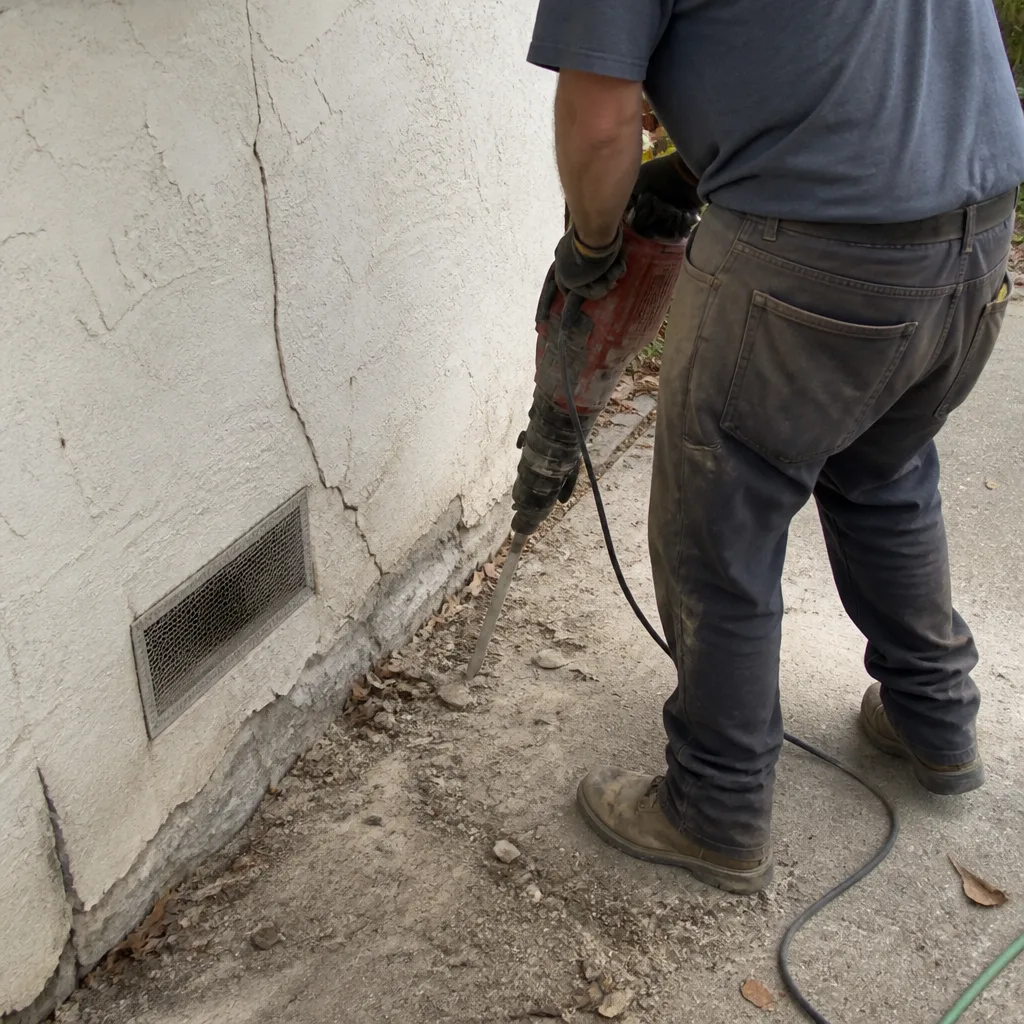 Before
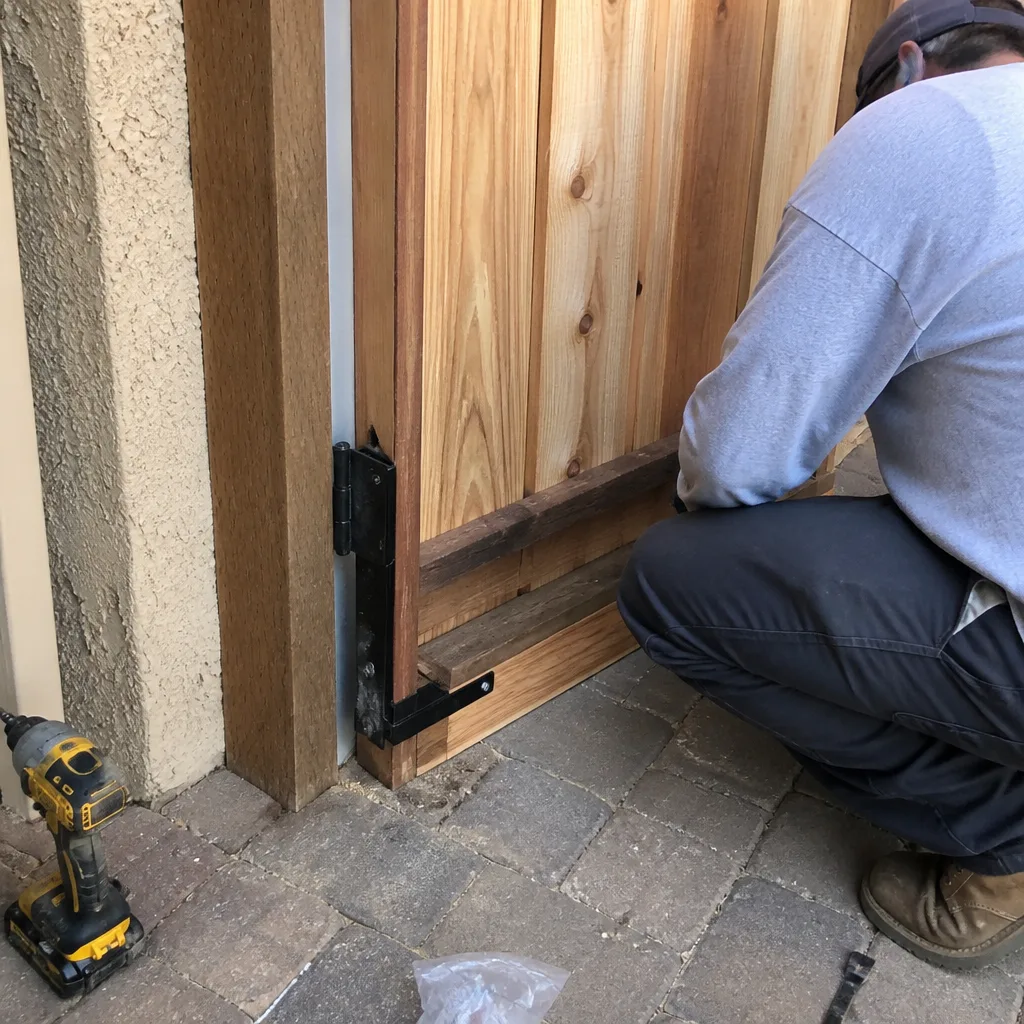 After
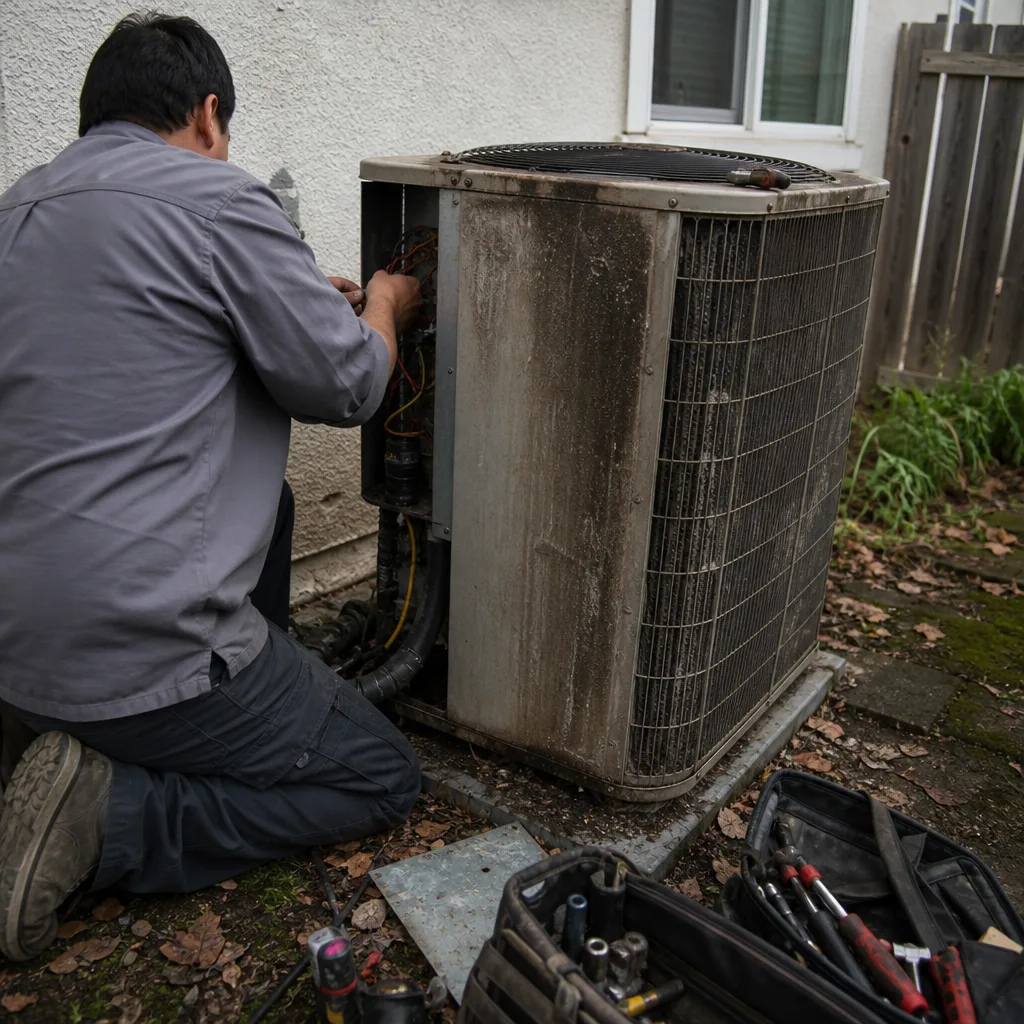 Before
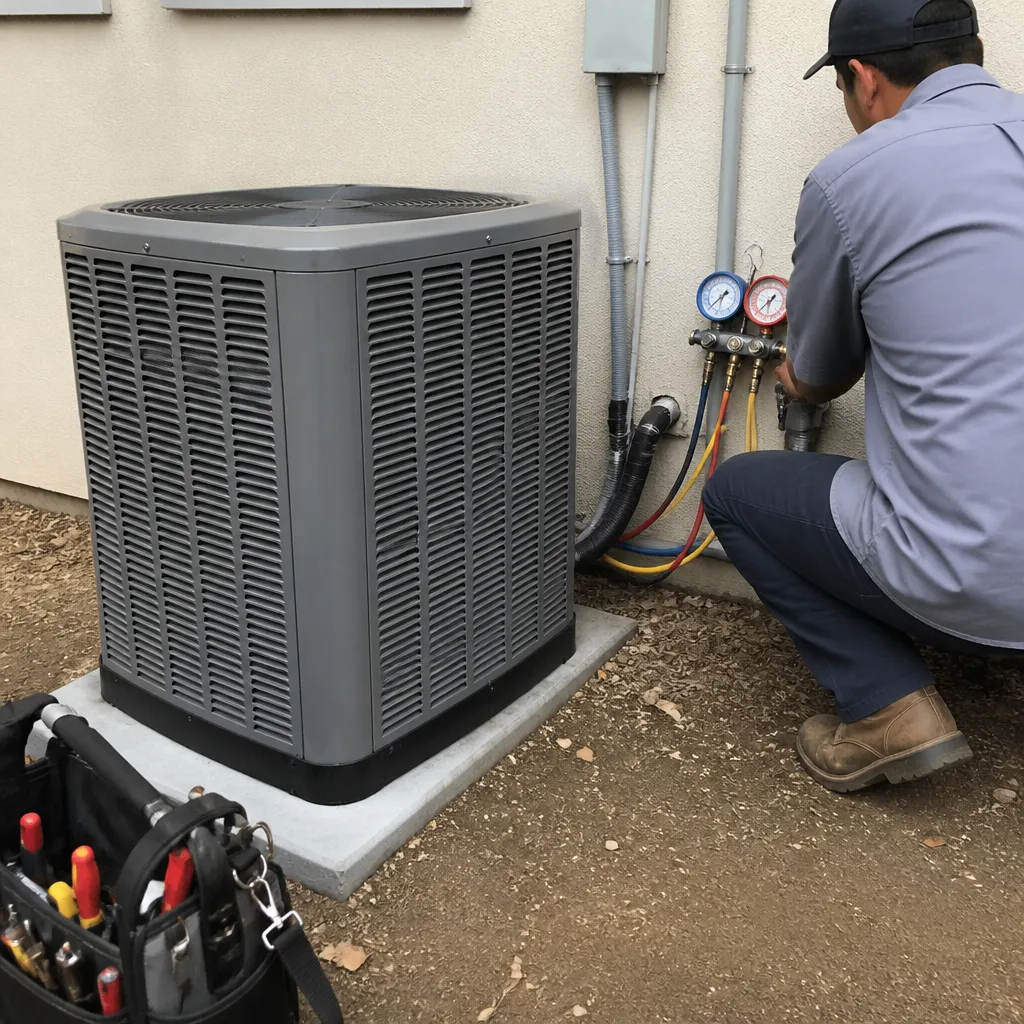 After
 Before
 After