
Emergency General Contractor Near Me: What Gilroy Homeowners Should Do First
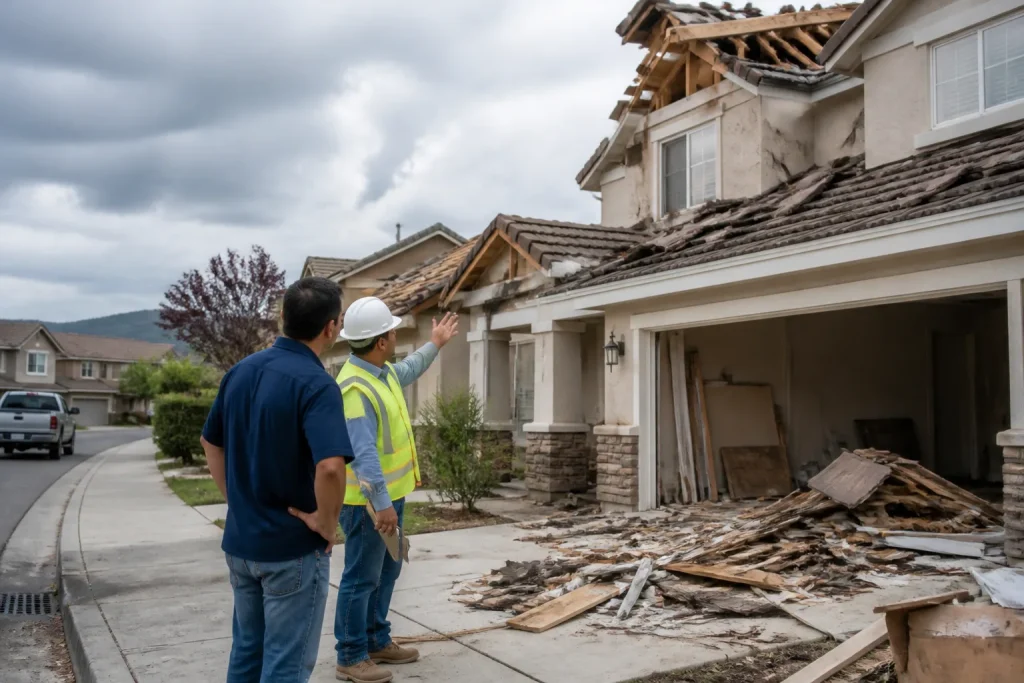
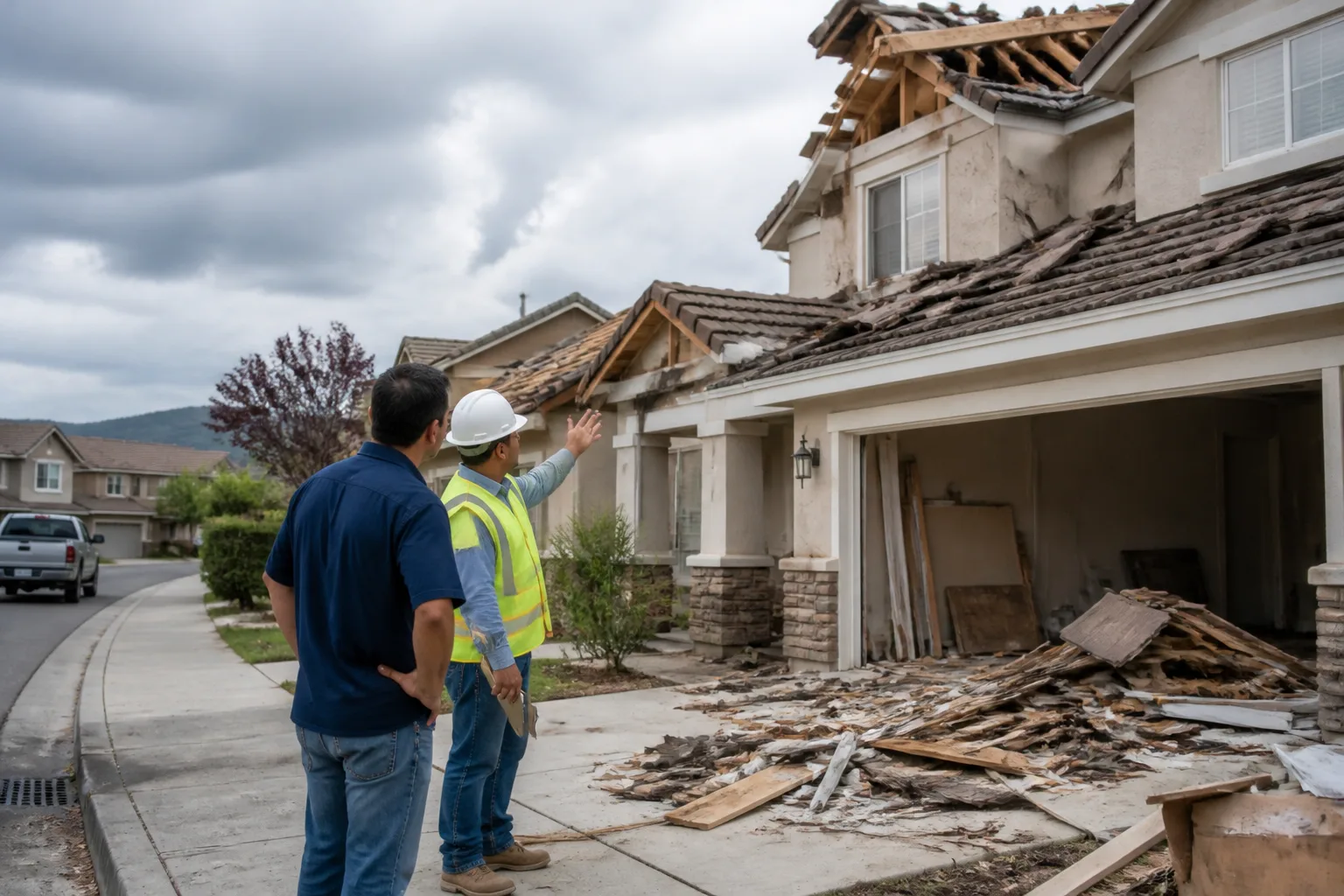
When a tree limb goes through your roof at 2 a.m. or a water heater floods your finished garage, the first call most Gilroy homeowners make is to a general contractor. That instinct is understandable, but it’s often backwards. Before you call anyone to fix anything, you need to document the damage and notify your insurer. Calling a contractor before you’ve photographed the damage and filed a claim isn’t just premature. It can legally reduce your payout if the carrier determines that unauthorized work altered evidence of the loss. Here’s the sequence that protects your claim, your home, and your wallet.
The First 60 Minutes: Document Before You Touch Anything
We know how it feels. Water is pooling, sheetrock is sagging, and every instinct says start ripping things out. Don’t. Not yet. The claims adjuster needs to see the damage in its original state, and your phone is the most important tool you own right now.
Here’s what to do in Gilroy before anything else:
- Take timestamped photos of everything. Wide shots first, then close-ups of every affected surface, material, and appliance. If water is actively rising, shoot a short video.
- Photograph the source. The fallen branch, the cracked supply line, the charred outlet. Cause-of-loss photos carry more weight with carriers than damage photos alone.
- Document the perimeter. Walk the outside of your home. Wind damage, roof punctures, and water entry points often show up first from the exterior, and they’re easy to miss in the chaos.
- Do not move, clean, or discard anything. A soaked carpet roll or a charred cabinet door is evidence. Once it’s in a dumpster, your carrier can argue you destroyed proof of the loss.
One thing we’ve seen repeatedly in Gilroy homes near the foothills: homeowners assume a small roof puncture from a wind event is fine because the ceiling hasn’t collapsed yet. Two weeks later, mold is forming in the attic insulation and the adjuster is asking why nobody called sooner. The documentation window closes fast. Use it.
Notify Your Insurer Within 24 Hours
Every standard homeowners policy in California carries a duty to notify the carrier promptly after a loss. “Promptly” usually means within 24 to 48 hours. Waiting longer gives the insurer a legitimate argument for reducing the claim, especially if secondary damage (mold, rot, rust) developed during the delay.
When you call, be direct and factual. You’re reporting water intrusion from a failed supply line, not speculating about what it will cost to fix. Request an adjuster visit before any non-emergency repairs begin. Take notes: the claim number, the adjuster’s name, the date and time you called. If they push back on anything, ask them to put it in writing.
A common mistake we see from homeowners in Gilroy who’ve had a kitchen flood or a fire in the garage: they let a well-meaning neighbor, handyman, or restoration company start cutting out wet drywall before the adjuster arrives. Then the carrier says the extent of the loss can’t be verified. That one decision has shrunk six-figure claims. Document first, notify second, wait for the adjuster third.
Emergency Stabilization vs. Repair: Know the Difference
Not everything has to wait. Most policies distinguish between emergency mitigation and permanent repair, and the distinction matters more than most homeowners realize.
Emergency stabilization work is what you can authorize immediately. This includes:
- Tarping a damaged roof
- Boarding up a broken window or door
- Shutting off the water or gas supply
- Extracting standing water
- Placing temporary shoring under a compromised floor or wall
These steps prevent further damage, and carriers generally reimburse them as part of the claim. They also keep your home safe and habitable in the short term. In Gilroy, where winter storms can dump heavy rain on already-saturated ground, tarping a damaged roof within hours is the difference between a contained claim and a cascading failure.
Repair work is permanent. Replacing sections of the roof deck, rebuilding a wall, installing new flooring, rewiring a circuit. This is the work that needs adjuster sign-off before it starts. If you authorize permanent repairs without that approval, you risk paying for them out of pocket.
The line between the two isn’t always obvious. A general contractor with experience in insurance-related repairs can walk the property and give you a written assessment of what qualifies as emergency mitigation and what should wait. That assessment, by the way, is exactly the kind of document an adjuster respects.
Verify the Contractor’s License Before Anyone Touches Your Home
This is where Gilroy homeowners get taken advantage of, and it happens more than anyone likes to admit. After a storm, a fire, or a major water event, unlicensed operators materialize. They knock on doors. They leave flyers. They offer fast work at prices that sound reasonable because they have no overhead, no insurance, and no license.
Any contractor performing structural work, roofing, electrical, plumbing, or any improvement valued at $500 or more in California must hold a current license from the Contractors State License Board (CSLB). Before you let anyone touch your home, go to the CSLB website and verify:
- The license number is active, not suspended or expired
- The contractor’s name matches the license
- The classification covers the work being performed (a “B” General Building classification, or a specialty classification like C-39 for roofing)
- The workers’ compensation and liability insurance are current
The disaster window is when unlicensed operators surface most aggressively because they know homeowners are desperate and claims money is moving. A $30,000 check for a roof replacement attracts people who don’t plan to be around when the first real rain finds their shortcut. We strongly recommend running a license check on anyone you’re considering. It takes five minutes and it’s free to check on the CSLB site by law.
The Emergency Permit Question: Who Pulls It, and When?
Not every emergency repair requires a city permit, but some do, and a licensed Gilroy contractor should tell you which is which without being asked. That candor is a good test of who you’re dealing with.
Generally, a permit is required in Gilroy for:
- Structural repairs to load-bearing walls, beams, or foundations
- Roof replacement or significant roof structural repair (not just tarping)
- Electrical panel replacement or wiring repair beyond a simple device swap
- Water heater replacement or gas line repairs
- Any new construction, including repairs that change the footprint or envelope
Emergency permits exist for situations where work cannot wait for the standard review cycle, and in our experience, the city’s building department is typically responsive when a home is genuinely unsafe. The responsible contractor pulls the permit and is named on it. If a contractor tells you to skip the permit because it will slow things down, walk away. Unpermitted work on an insurance repair can void your claim, complicate your future sale, and leave you holding an uninspectable repair.
Let’s be plain: if a wall has to come down at 9 p.m. to keep your house from falling in, you do what you have to do. But the next morning, you call the city and explain what happened. It’s the homeowner’s home, but the permit is the contractor’s job.
What to Ask a General Contractor About Insurance Work
Contractors who “handle the insurance” for you sound helpful. And in some ways they can be. But here’s the dynamic most homeowners don’t see until it’s too late. A contractor’s financial interest is in the scope of work they perform. Your financial interest is in the maximum payout your policy allows. Those two interests only sometimes align.
Before you sign anything, ask these questions:
- “Are you licensed for this specific type of work?” A kitchen remodeler is not automatically a roof repair specialist.
- “Who pulls the permits, and what’s the timeline?” A real answer here tells you a lot about their process.
- “Will you work directly with my adjuster?” A good contractor will. A contractor who avoids the adjuster is telling you something.
- “How do you handle change orders?” Insurance repairs discover hidden damage constantly. You want a contractor who documents every new condition in writing before touching it.
- “Do you have a public adjuster you recommend, or do you work with one?” Public adjusters work for you, not the carrier. If a contractor bristles at the idea of a public adjuster being involved, ask why.
One situation we’ve watched play out in Gilroy more than once: a contractor offers to “deal with the insurance company directly” so the homeowner doesn’t have to think about it. Then the contractor’s scope gets approved at $18,000 for a repair that should reasonably cost $27,000. The homeowner saves no effort. They just lose the difference. Your claim is your claim. A contractor’s job is to execute the repair well, not to negotiate your payout.
Why We Think About This Differently at Silver Line Contractors
We’re a general contractor in Gilroy, and our approach to emergency work is shaped by the fact that we also carry full-scope residential construction experience. That matters in ways that are not obvious when you’re standing in a flooded hallway.
An emergency water event in a Gilroy home has a way of turning into a bigger project. The water heater that failed in the closet behind the kitchen also soaked the adjacent wall. That wall shares a chase with the electric panel. Now you’re talking about drywall, insulation, possibly a panel inspection, and when the wall is open anyway, maybe the homeowner realizes this is the time to update the kitchen plumbing they’ve been ignoring since the Clinton administration.
Most emergency repair specialists do one trade: water mitigation, or roofing, or electrical. They’re good at their one thing. But when the project spans trades, you end up as the general contractor of your own life, coordinating three specialty companies, two insurance adjusters, and a permit counter. That’s where a home remodeling contractor in Gilroy with broad scope becomes genuinely useful. One contract means one accountable party. One point of contact for the insurance documentation. One person to call when the new drywall reveals an old problem.
We also carry material relationships that matter in repair scenarios. When a Gilroy homeowner needs flooring replaced after a water event, we can show them options from budget-friendly lines to premium materials, with real pricing, not a take-it-or-leave-it single option. When a wall is open and the homeowner wants to upgrade a bathroom fixture while we’re in there, we can quote name-brand fixtures like Delta, Kohler, or Toto and let the budget drive the choice rather than the other way around. For tile surrounds that will actually survive the next water event, we specify Schluter waterproofing systems, because we’ve torn out enough failed showers to know what happens when that layer is skipped. Material choices at every budget tier. That’s the advantage of dealing with a contractor who has seen the full range of residential work.
An Anecdote, Because This Work Gets Personal
We pulled a job a while back in a Gilroy neighborhood south of the high school where a homeowner called us after a “handyman” had already started a repair. A pinhole leak in a copper supply line had soaked the floor under the kitchen. The handyman cut out the wet subfloor, which was fine, but then he patched it with the wrong thickness plywood, which was not fine. The tile cracked within six months. When the homeowner tried to file a supplemental claim for the failed patch, the carrier denied it because the original damage had already been “repaired.” The unauthorized work didn’t just fail. It poisoned the claim. We ended up doing the job right, as a home renovation in Gilroy, but it cost the homeowner thousands more than if the first call had been a licensed contractor who understood how insurance claims actually work.
When to Call a Pro
If you’re reading this while standing in a wet kitchen with a mop in one hand and a phone in the other, here’s the honest version: call a pro. Water damage gets worse every hour it sits. A licensed contractor can document what you’re seeing, coordinate emergency mitigation, and give you a clear-eyed assessment of what the permanent repair will involve. That’s far better than guessing at the edges of a problem while the problem grows.
If you’re in Gilroy and need help, Silver Line Contractors home is the starting point. We offer free estimates, and we’ll tell you honestly whether your situation is an emergency stabilization job, a standard insurance repair, or a project that’s been waiting for an excuse to happen. Call (833) 400-1314 and we’ll walk you through it.
The Bottom Line
Here’s what we hope you take from this: the 48 hours after a disaster are when your claim is either protected or compromised. Document everything. Notify your insurer. Distinguish between emergency stabilization and permanent repair. Verify licenses. Understand permits. And never let anyone “handle the insurance” without you understanding exactly how they plan to do it.
If you’re in Gilroy and need help sorting through an emergency, a repair, or a full home renovation in Gilroy, Silver Line Contractors offers free estimates. Call (833) 400-1314. We’ll help you figure out what you’re actually dealing with, and what to do next.
Frequently Asked Questions
After you’ve documented the damage with photos and video and notified your insurer, call a contractor the same day if possible. Emergency stabilization like water extraction and tarping should happen within hours, not days. For a free assessment, call (833) 400-1314.
Most policies cover emergency mitigation work like tarping, board-up, and water extraction, provided the original cause of the loss is covered and you notified the carrier promptly. Permanent repairs typically need adjuster approval first. The exact terms depend on your policy, so read it carefully or ask your adjuster to explain coverage in writing.
Not for temporary stabilization like tarping or board-up. Structural repairs, roof replacement, electrical work, and water heater replacement generally require a permit. A licensed contractor should tell you which work needs one and pull it. If a contractor suggests skipping a required permit, find another contractor.
A contractor can document damage, provide estimates, and meet with your adjuster, but they should not be the primary voice negotiating your claim. That’s your job or the job of a public adjuster who works for you. Contractors who promise to “handle everything” often do so in ways that benefit their scope more than your payout. Call (833) 400-1314 if you want an honest assessment of what your repair will involve.
Written by the team at Silver Line Contractors, serving Gilroy since 2017.
Need Construction Help?
Call Silver Line Contractors — licensed & insured, here with fast after-hours help in Gilroy.
(833) 400-1314