
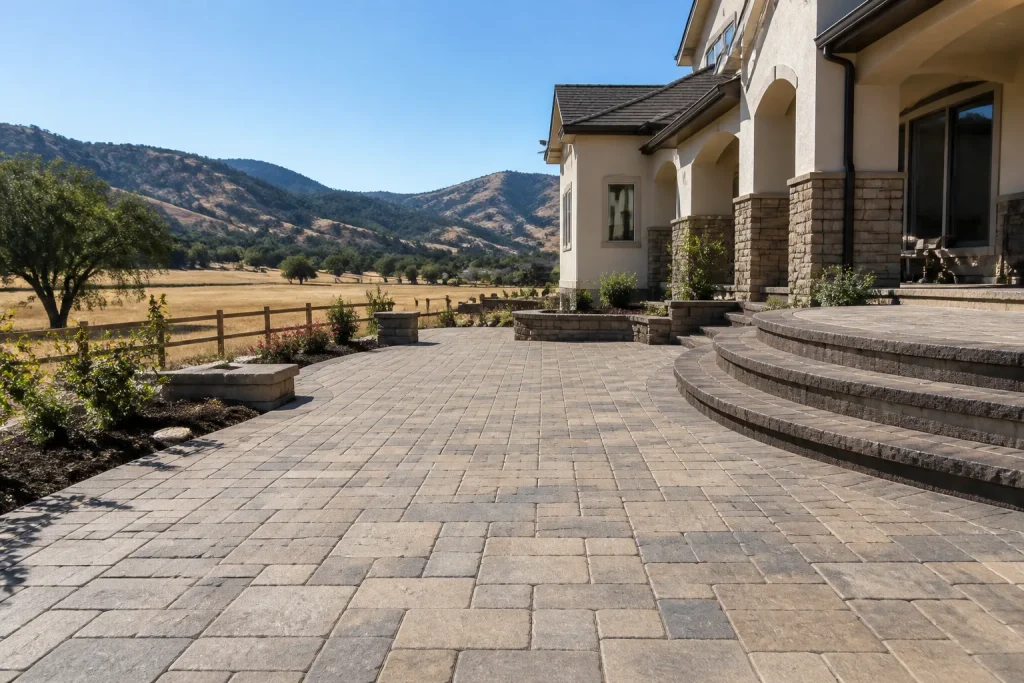
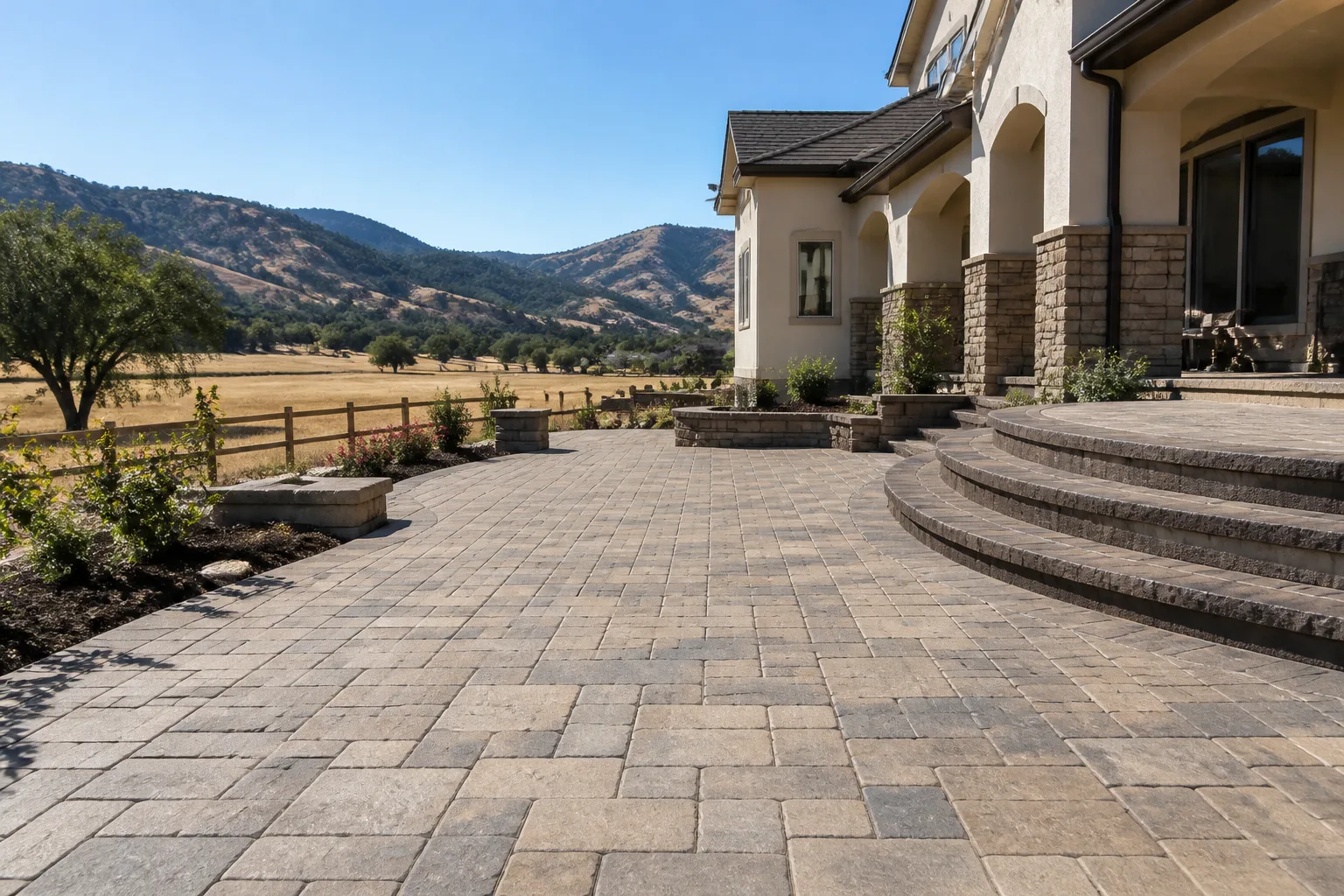
Cambridge Pavers General Contractor in Gilroy: A Homeowner’s Guide
Cambridge Pavers look fantastic the day they’re installed, but here’s what the brochure won’t tell you: the difference between a patio that still looks new in fifteen years and one that’s heaved, cracked, and sinking in five comes down to what’s underneath the pavers, not the pavers themselves. In Gilroy, where our clay soil expands and contracts with every wet winter and dry summer, that distinction matters more than almost anywhere else in the Bay Area. If you’d rather skip the research and talk specifics about your yard, call us at (833) 400-1314 for a free estimate.
Why Base Preparation Matters More in Gilroy Than the Pavers Themselves
Here’s the core answer every Gilroy homeowner needs: Cambridge Pavers are a quality product, but their lifespan in our area is determined by base preparation and drainage design far more than by the paver itself. The lifetime warranty Cambridge offers covers manufacturing defects in the units. It does not cover settlement, cracking, or heaving caused by improperly compacted base material. And in Gilroy’s expansive clay soil, that’s the failure we see most often.
Gilroy sits on soil that swells when wet and shrinks when dry. This cycle of expansion and contraction pushes upward on any rigid surface above it. A standard paver installation in sandy or loamy soil might call for 4 to 6 inches of aggregate base. In Gilroy, we recommend 8 to 12 inches, with a geotextile fabric separating native clay from the crushed rock above. That fabric prevents the clay from migrating upward into the aggregate over time, which is exactly how voids form beneath pavers and lead to low spots that collect water and eventually crack.
We pulled a patio apart over near Christmas Hill Park a few years ago where the pavers themselves were in perfect shape. The problem was three inches of aggregate over bare clay, no geotextile, and a base that had been compacted with a hand tamper instead of a plate compactor. The homeowner had paid a competitive rate for the install and was now paying again to have it redone correctly. That’s the expensive version of saving money.
Drainage Slope and Cambridge’s Permeable Lines: Why This Requires Real Coordination
Every hardscape installation in Gilroy needs a minimum slope of 1% away from structures. That’s about 1/8 inch of fall per foot, and it’s non-negotiable. Without it, water pools against the foundation, seeps under the pavers, and accelerates base erosion. Cambridge does make permeable paver lines designed to let water through the joints and into the base below, but those systems still require the same positive slope at the surface level. Permeable does not mean flat.
This is where a full-scope general contractor earns their fee. If your patio is going in alongside an outdoor kitchen, a retaining wall, or deck footings, the drainage design has to account for all of them at once. The subgrade under the pavers needs to tie into the drainage behind the retaining wall. The slope needs to carry water away from the outdoor kitchen’s foundation. The deck footings need to be isolated from the paver base so they don’t settle at different rates.
When those elements are scoped as separate contracts by separate installers, nobody owns the drainage plan. The paver installer runs slope one direction, the deck builder pours footings that cut it off, and water gets trapped exactly where the hardscape meets the structure. Coordinating all of it under one contract means one person is accountable for how the whole system drains.
What a “Certified Cambridge Contractor” Actually Is – and What It Isn’t
Cambridge maintains a contractor certification program, and it’s worth understanding what that credential really means. A Cambridge-certified contractor has completed training on their paver systems, installation standards, and product specifications. The certification tests installation knowledge: base depth standards, edge restraint methods, joint material selection, and proper compaction techniques.
What it does not test is whether the contractor understands how a paver installation integrates with the broader construction around it. A paver installer can be fully certified by Cambridge and still not know how to tie paver drainage into a retaining wall system, coordinate a patio slope with an existing roofline, or sequence paver work around a prefab ADU delivery.
That’s the difference between a hardscape-capable general contractor and a paver specialist. The specialist knows the product extremely well. The general contractor knows the product and how it behaves when adjacent to foundations, drainage systems, outdoor structures, and everything else on the property. For simple standalone patios, a certified Cambridge installer is the right call. For anything involving multiple scopes in Gilroy, you want one team responsible for the whole picture.
Realistic Cambridge Paver Pricing in the South Bay
Cambridge paver installations in Gilroy typically run between $18 and $32 per square foot, complete. That range covers the broad variation depending on the specific paver line, access conditions, existing soil conditions, and whether the project includes additional hardscape elements. Here’s what that pricing actually includes, because the line items matter:
- Excavation and soil removal: Getting down 10 to 14 inches below finished grade in Gilroy clay is heavy work, and hauling the spoils away costs money.
- Geotextile fabric: Frequently skipped by low-bid installers, essential in expansive soil.
- Aggregate base: 8 to 12 inches of crushed rock, installed in lifts and compacted with a plate compactor.
- Bedding sand: Typically 1 inch maximum, screeded level.
- Edge restraint: Concrete or aluminum edging pinned into place – without it, pavers drift outward over time.
- Polymeric sand joints: Stabilizes the pavers and resists weed growth and ant intrusion.
- Sealing: Optional, but it deepens the color and protects against staining, typically adding $1 to $3 per square foot.
The line items installers routinely exclude from low-bid quotes are the geotextile fabric, the edge restraint, and sometimes even the plate compaction passes. That’s how a bid comes in at $12 per square foot and the pavers look terrible within two years. When comparing quotes in Gilroy, ask each bidder to itemize the base depth, geotextile inclusion, edge restraint type, and number of compaction passes. If they can’t answer, keep looking.
Why Pavers Next to Outdoor Kitchens, Retaining Walls, and Decks Should Be Scoped Together
When pavers are installed next to any structure, the two systems interact in ways that get missed when they’re bid separately. An outdoor kitchen has a foundation or at least a structural pad. A retaining wall has a footing and drainage behind it. Deck footings extend below grade and create settlement points. Pavers installed against any of these need base design that accounts for differential settlement: the pavers will move slightly over time, the structure should not.
In Gilroy, where the soil already creates movement, this coordination matters even more. The paver base adjacent to a retaining wall needs a drainage connection so water doesn’t build up behind the wall and push it forward. The pavers around an outdoor kitchen need slope away from the structure’s pad so water doesn’t pool under appliances and cabinetry. Deck footings should be poured before the paver base is compacted so the compaction doesn’t shift them.
Scoping these together under one contract also solves a practical problem: sequencing. The excavation happens once. The base goes in once. The retaining wall, kitchen pad, footings, and paver base all get built in the right order without one crew undoing another’s work. When you hire separate contractors, you become the project manager, and the sequencing headaches are yours.
How Gilroy’s Climate Affects Paver Performance Over Time
Gilroy gets hot. Summer temperatures routinely push past 90 degrees, and the sun exposure on a south-facing patio can push surface temperatures past 140. Cambridge pavers are manufactured to handle this, but lighter color selections will keep the surface cooler and more comfortable under bare feet. Darker pavers absorb more heat and will fade slightly over a decade of South Bay sun, which is normal and expected.
The bigger climate factor is the wet-dry cycle. Gilroy’s winters bring enough rain to saturate the clay soil beneath the base, and the summers bake it dry again. Each cycle produces measurable soil movement. A properly installed base with a geotextile layer and adequate depth absorbs this movement. A shallow base transmits it directly to the pavers. We’ve seen properly installed Cambridge patios in Gilroy go fifteen years with only joint sand touch-ups needed. We’ve also seen shallow-base installs heave within three years. The paver product was identical in both cases.
This is why we’re direct with our clients about base depth. There’s a temptation to trim the base to save money, especially on a large patio where an extra four inches of gravel across 800 square feet adds real cost. But in Gilroy soil, that savings disappears the first time the patio heaves and needs to be torn out and rebuilt.
The Bottom Line
Cambridge Pavers are a legitimate premium product, and they’re a strong choice for Gilroy properties – provided they’re installed on a properly engineered base that accounts for our expansive clay soil, our drainage patterns, and the way hardscape integrates with other structures. If you’re getting quotes, compare the line items, not just the square-foot price. If you’d like help evaluating options or want a full-scope plan that coordinates hardscape with your other exterior work, Silver Line Contractors offers free estimates. Call (833) 400-1314 and we’ll walk your Gilroy property with you.
Frequently Asked Questions
Cambridge paver installations in Gilroy typically run $18 to $32 per square foot, complete with proper base preparation, edge restraint, and polymeric sand. Larger projects may fall slightly below this range; complex projects with retaining walls or outdoor kitchens above it. Call (833) 400-1314 for an exact quote on your specific project, estimates are free.
The most common failure we see is base settlement caused by inadequate aggregate depth and missing geotextile fabric over expansive clay soil. The pavers themselves rarely fail. In Gilroy, we recommend an 8-to-12-inch aggregate base with a geotextile separation layer, which exceeds the standard 4-to-6-inch depth used in regions with sandy or loamy soil.
Yes. Cambridge pavers are manufactured to withstand prolonged sun exposure and high surface temperatures without structural degradation. Lighter paver colors will stay cooler underfoot and fade less over time than darker colors, which slowly lighten after years of South Bay sun.
Not if the contractor did proper due diligence before quoting. Price changes on paver projects typically come from two sources: undisclosed soil conditions that require additional excavation, or change orders when the homeowner alters the scope after work begins. A thorough walkthrough and clear line-item quote eliminates most of this risk. We provide written line-item estimates so you know what you’re paying for before any work begins.
Written by the team at Silver Line Contractors, serving Gilroy since 2017.
Need Construction Help?
Call Silver Line Contractors — licensed & insured, here with fast after-hours help in Gilroy.
(833) 400-1314